Showing posts with label The Dark Knight. Show all posts

Wednesday, March 30, 2016

Movie Review: Batman versus Superman: Dawn of Justice

Hey there Chaos fanatics! No, I haven't forgotten about you, not at all. Its just that I've been really busy the past few weeks. I am working on a large painting project which I will show off when its done. I have a ton of 40K stuff that I have to put together... Wowza.

Anyway, like the title says, I'm going to share my two cents on Batman Versus Superman: Dawn of Justice. No doubt you've heard the film is divisive, to say the least. Well, Old Man Chaos intends to wade into those waters, with his own take on the proceedings. So- away we go.


First, I must acknowledge that Batman Versus Superman is not a perfect film. Indeed, it has serious flaws. However, it is also a very entertaining movie, with some thought provoking ideas and two incredible performances (and a bunch of good ones as well). Indeed, I feel the good far outweighs the bad.

SPOILERS TO COME


STILL THERE? SPOILERS ARE COMING!


To start, one must admit that BvS, like The Force Awakens, serves many masters. TFA had to accomplish a TON- show that SW is viable and relevant, get the bad taste of the prequels out of our mouths, dial up the nostalgia/fan service, create new compelling characters, create an exciting movie in its own right, and lots more. TFA is, frankly, a minor cinematic miracle in how many of these things it accomplished. We can quibble about having yet another super-death star and the like, but the fact is TFA did what it HAD to do to save the SW franchise and pull it forward- and the result is a highly entertaining film to boot.

BvS also serves many masters. Snyder and co had to: make a quality sequel to Man of Steel, try to deal with fan anger over the "mass deaths" issue, try to create a new Batman after Bale/Nolan's definitive take, lay the groundwork for a new DC franchise, go head to head with Marvel, and lots more. BvS accomplishes many of those as well. However, while JJ made it look EASY in TFA (seriously, the movie feels like seeing an old friend), Snyder runs into problems in BvS. For some people, these problems derail the whole thing. I however do not see it that way. I think the whole is stronger than the sum of its parts.


I want to start with the negatives first, if I may. First and foremost, the damn flashbacks / dream sequences / warning from the future. Right here is where the filmmakers try to build their universe too quickly. They throw so much at you, stuff that makes little sense. But worse, these sequences stop the film dead in its tracks. The movie just starts to build momentum when the first dream happens. Then the film chugs to recover when a (thankfully) shorter dream takes center stage, once again jarring the viewer out of the main thrust of the film. Both annoyed me- I think they should have been trimmed into a melange of images that make no sense- but happen quickly. Or perhaps they should have been excised entirely. The flow of the film suffers for these sequences.

The flow of the ending is very choppy, as we jump from ending to ending. Once again, I wish this had been done in a more linear fashion. But instead we jump from place to place, backwards and forwards. This diminished what I felt could have been a truly powerful conclusion. Instead it gets muddled, and again their eye is on setting up the future DC franchise, taking it off the BvS film itself.


I wish that the Lois Lane story was given a bit more import and time- I think showing Lois as a peerless investigative reporter is essential, and the "bullet" mystery is great, but it gets lost amidst the rest of the film's bombast. And its so important, but that importance has been blunted because of the truncated feel of her "side story".

There are some pacing issues overall, and a few things that don't make 100 percent sense to me (admittedly, I think I need to see the movie again to sort it out. I say that because as I think about it so much in BvS actually DOES make sense. It may be me. It may be that scenes were deleted).

Now, I really want to get into the plot and our three leads, as I feel these aspects are what makes the movie better than a casual look and/or the negatives might suggest.


First, Snyder and company throw a lot of questions at you about the Man of Steel. Should he be held responsible for the battle of Metropolis? Is he a hero or not? Should he be held to the same rules as the rest of us? Is he a god? A savior? An alien? The film devotes some time to these questions- politicians and the TV pundits / talking heads debate these quite a bit. Some criticisms have been laid that Snyder doesn't resolve these. That's outrageous. Of COURSE there's no consensus or conclusion to these. Look at the US right now- we argue about EVERYTHING. Nothing is "settled". I think the film does a fine job of building all of these up without a "full" resolution. That would be too easy, and Snyder doesn't fall for it.

Indeed, that is the core of the film. If such a "Superman" existed, how would the world respond? How would people view him? The entire film is about this very issue. Both Batman and Lex Luthor are, for their own reasons, consumed by these questions.


 Let's start with the easier of the two, Batman. First, I want to say that Ben Affleck gives this his all and then some. His performance is so good, so on the mark for THIS version of Batman, that its practically a revelation. Not only does he have the physical presence, the gravitas, the determination- he also has doubts about his "mission", and his witty banter with Alfred (played nicely by Jeremy Irons)- all done to near perfection. I cannot wait to see "Batffleck" in future DC films. He's that good. I still think Bale is the best, but in time... who knows?


Now let's look at Batman's motivation. He has been fighting crime for years. He has grown frustrated in his mission (criminals pop up like weeds, he laments to Alfred). He has lost Robin, and possibly other allies. You sense the weariness. It seems that fighting crime is a losing proposition. As he hits this point and becomes so bitter, his life is changed when he witnesses Superamn fighting Zod in Metropolis. Wayne Enterprise workers are killed, and Bruce can do nothing. He sees gods fighting with him and his people as nothing but ants. This feeling of powerlessness is added to his frustrations of a weary Batman, creating an even more bitter and vindictive Batman.

The film makes it quite clear that Batman has been getting worse. He has, as the film starts, been branding some criminals. In the film he does indeed kill (indirectly with the Batmobile and plane, but still). While many are screaming that this is breaking Batman's cardinal rule, I say not so fast. First, every modern film Batman (except for Clooney- and that should tell you something) has killed. Burton's Batman killed the Joker, Joker Henchmen, Penguin Henchmen, Penguin... Val Kilmer killed Two-Face at the end of Batman Forever. And Nolan... try as he might, he didn't avoid it either. How many League of Shadows goons did Bruce kill escaping their mountain citadel? He then later KILLS Ras (the line "I won't kill you... but I don't have to save you" hardly absolves him). In TDK he doesn't kill, but in TDKR his Bat-Plane surely blows up a few LoS henchmen (along with Talia). He may not kill Bane, but Batman doesn't even blink when Catwoman guns him down. Hell, Batman doesn't even check to see if Bane is alive! So please- don't give me the Batman doesn't kill thing. At least in film.

However, and more importantly, it serves the plot and arc for Batman. He has no hope, and he descends, ever closer to that line, the abyss that will make him what he hates. A villain. He's so close to that. And the appearance of Superman makes Bruce feel as if his entire career as Batman is pointless. What difference does a criminal make when you've got Superman and others who could destroy the world. Batman has been fighting small fires (and losing). Superman upends Bruce entirely.


Now, while Bruce is internalizing this, he comes to the conclusion that Superman must be destroyed. This may be the only thing Batman might do to keep the world safe, the only thing Batman can succeed at. Bruce becomes determined to stop Superman, using ANY means necessary. He believes that only such a measure can save THE WORLD. Not Crime Alley or Gotham- the future of the world.


Batman cannot see that Superman is good, as Bruce is too far lost in his own despair. Alfred tries to act as Bruce's conscience, but Bruce may already be too far gone. All he can see is the danger. He cannot admit to other possibilities. So, he sets out to fight and destroy Superman.


That brings us to... Lex Luthor. Now, Jesse Eisnberg's performance may be the most divisive thing in the film. And while I get some of the complaints, I find that the character is actually well handled in the final analysis. And what he symbolizes in the plot is just enormous.


First, this version of Lex is an amalgamation of all the versions of Lex. So many people want the bald ruthless industrialist version. The fact is this version has only been around since the 1980s. Lex has gone through LOTS of incarnations. In the Golden Age, "Luthor" was a mad scientist with red hair, with futuristic weapons at his disposal- he threatened the world many times over in the 1940s. Later versions have Lex Luthor as a bald mad scientist type blaming Superboy for an accident that caused the baldness.


 The eccentric and outlandish insane genius persisted for years (and is the basis for the Gene Hackman version). Then, in the 80s, Luther got reinvented as the megalomaniac industrialist billionaire businessman that we know and love today.


BvS Lex Luthor is a combination of those elements, combined with the new billionaire, the tech guru. Look at guys like Jobs, Zuckerberg, Beezos, and any of the other silicone valley billionaires. They are an eccentric bunch- nerds and geeks. But- they are a major force in our economy and just about every other facet of our lives. Indeed, their nerdiness and tech have made them VERY powerful. The Internet not only has info on EVERYBODY, it also has the power to mold people, shape events, change the world. In fact, it is scary how much power and influence the tech world has over us.

Eisnberg's Luthor combines the various Lex incarnations with this modern "tech industrialist" sensibility. The result is a Lex who is full of insecurity, nervous tics, and eccentricities. Underneath that veneer though, is a man used to getting his own way. His company literally has the sum of human knowledge at his fingertips. as well as the money and power that goes with that. Luthor is truly the (invisible) master of his domain. He is used to having total control, with everyone dancing to his tune- other businessmen, consumers, the media, and naturally politicians...


Luthor is king of the world- but like Batman, his world changes when Superman fights Zod. Suddenly, like Batman, Luthor's accomplishments feel VERY small. He is the king of nothing. He is an ant to Superman. This feeling of powerlessness drives Luthor. But, rather than be like Bruce, wanting to protect the world, Lex only sees his own ego. He views Superman (and the meta-humans that he is researching) as a personal challenge. Lex will have all of these beings dancing to his tune, one way or the other. Its the only we he can stay powerful and, frankly, relevant.

Some critics have said Luthor's intentions are murky. Nonsense. He spells it out (in his eccentric way). Luthor compares himself to Prometheus at a party. This legend tells how Prometheus challenged the gods- stealing fire and giving it to man. That is exactly how Luther sees himself- he is going to take on the gods. What other challenge is there in life for someone like him?

This scene takes on new meaning when you realize Lex KNOWS who both of his guests are long before.
 So- Luthor does many things- and you have to sort though his many layers of machinations. He begins to keep tabs on meta-humans (and Batman presumably). He learns a lot about them- facial recognition software is a wonderful tool- Luthor quickly figures out that Batman is Bruce, and Superman is Kent. Lex learns about Kryptonite as well. So he sets out to put the two against each other. Lex engineers events that make Superman look questionable (the dessert bullets, the explosion of the Senate). Meanwhile, he ALLOWS Batman to dig in a little into Lex's knowledge, with Batman discovering Kryptonite. Lex WANTS Batman to get the Kryptonite. He wants to make Bats kill Supes. Why should Lex get his hands dirty? After all- he's making this happen, and that gives him his kicks.


But- why would Superman fight Batman? Lex kidnaps Ma Kent (and in his best scene) Luthor explains that if Supes doesn't fight Batman, Ma Kent will die. Some have criticized this, after all is this all Lex is capable of- brute force against an old woman? Nonsesne. He manipulated Batman so well, testing his intelligence. For Superman, brute strength will do (hence the crude threat to Ma Kent). As Luthor throws pics of the captive Ma Kent at Superman, the hero falls to his knees. Lex is exultant, and Eisnberg gives him a cruelty unmatched by many modern comic movie villains (he exudes more menace and evil in this ONE scene than Mandarin, Ultron, Dark Elf, Ronan, and most of the other Marvel movie villains put together). In this moment he is evil, despicable and perhaps, MORE powerful than Superman.


So, Batman and Superman fight. Now lets get to the third piece, Superman himself. Henry Cavil does a good job here, though his role is less flashy than either Batman or Luther. Superman is a man still unsure of himself, his powers, and his place in the world. He WANTS to help, and doesn't want reward. He is idealistic (a dream of a Kansas farmer). But, even he sees how dark and hopeless our world is. Can he stay pure? Can he truly "save" others? Superman is uncomfortable of the hero worship, and he is truly hurt by the criticism and jealousy. He has many doubts. However, he does have convictions. As Kent, he appears to be a bit of a crusading journalist, feeling that Batman only attacks the poor and disadvantaged, and his tactics are brutal, savage. To Superman, Batman is bad- and worse, represents what Superman could be if Kent LOST his moral compass.

For both good and bad, Superman is forced into a bit of a reactionary role, reacting to Batman, Lex, and events that Lex has caused. This both strengthens and weakens the character's portrayal. When he confronts Lex, he is hamstrung- he wants to protect both Lois and Ma Kent. He has no choice but to dance to Lex's tune. Or does he?

When Supes goes to fight Batman (unaware of the Kryptonite threat), rather than fight Superman tries to reason with Batman, but Bruce is past that. The fight is brutal, but Batman has the upper hand with the Kryptonite. As Batman is about to land the killing blow (with a Kryptonite Spear of Destiny no less), Superman calls out Martha- his mother's name AND ironically Bruce's mothers name. Now, some asked "Why did Superman call out his mother's first name rather than say 'mom'"? They didn't hear the whole thing- Superman is struggling to breathe- he says to Batman that he needs to save Martha Kent- how else would Batman have known who "mom" was? No. So it actually makes sense. With that, Batman stays his hand- he and the god have something in common after all. All of Bruce's doubts (and Alfred's lecturing) come to the surface. Batman has been a fool. Superman is GOOD. Bruce was wrong. But he vows to correct the mistake by rescuing Ma Kent. Batman's line "Martha will not die tonight" sent shivers down my spine.


Meanwhile, Lex plays his last hand. He has spent a part of the film researching the secrets of Kryptonian knowledge and technology. Once again playing Prometheus, he uses this knowledge to build Doomsday- again, to prove his superiority, but also as insurance against Superman (should he win) and the other meta-humans. The battle with Doomsday is brutal, with Wonder Woman making her appearance (a minor role, but Lex had her in his file and she was concerned about it). When all seems lost, Superman grabs the Kryptonite spear, and destroys Doomsday with it. In the process, Superman is also killed.

(For those complaining about Doomsday- in the original Death of Superman comic storyline, Doomsday was one dimensional, to say the least. A force of nature without direction or goal. Indeed, Doomsday is just a plot device to kill Superman. The main meat of the storyline is the Return of Superman- which involves various Super-imposters and versions of the Man of Steel. Now, Doomsday has been upgraded since. But in the original story, he has ZERO character or motivation. For me, Lex's engineering of Doomsday is good enough for me. There are more Superman villains out there- to me Doomsday is sub par at best- so I'm glad they got him out of the way). 


In the end, Bruce realizes the error of his way, and vows not to fail again. He swears to honor Superman's sacrifice. It is clear that Superman's example has redeemed Batman. Batman has come out of the darkness, morally and spiritually. And now Batman wants to assemble these other meta human heroes to protect the world. The life and death of Superman now serve as an example, and Bruce means to live up to that as best he can. It is a great conceit, and it flies in the face of the "comic standard" idea that Bruce is reluctant to join  the Justice League. I loved the turnaround. It also plays into Jor El's lines in MoS saying that Superman should be an example to all mankind, and I appreciated the callback to that.


To me- that is what the film is about- Batman's redemption. Naturally, Superman will come back (I think...). We will also see new DC heroes as well. The film successfully makes you WANT to see what happens next. But it is Batman's character arc (compared/contrasted with Lex's) that make the heart and soul of the film.

I left a ton out, but that's OK. I think the film is a good, but not great one. It's flaws detract from what could have been a great movie. I give it 3 out of 4 Marks of Chaos. Subsequent viewings may change the rating, but that's what I'm thinking right now.

Monday, June 17, 2013

Go See Man of Steel---- Now!

Hey there Chaos fanatics. Old man chaos is here with a public service announcement. If you are in any way, shape, or form a comic book fan (DC, Marvel, it doesn't matter), a sci-fi fan, or an action fan, you owe it to yourself to stop reading this blog post and go and see Man of Steel. It is a bold, complex, and totally engaging movie- it takes the more "realistic" tact of The Dark Knight series but tweaks it, and adds in a lot of sci-fi. I think this movie will once again change the comic book movie as art form  paradigm.

Just go see it. Love it or not, it is worth seeing. I will be back for a review, as soon as I can see it again...


What are you waiting for?! Go see it!!!

Until next time...

Monday, December 31, 2012

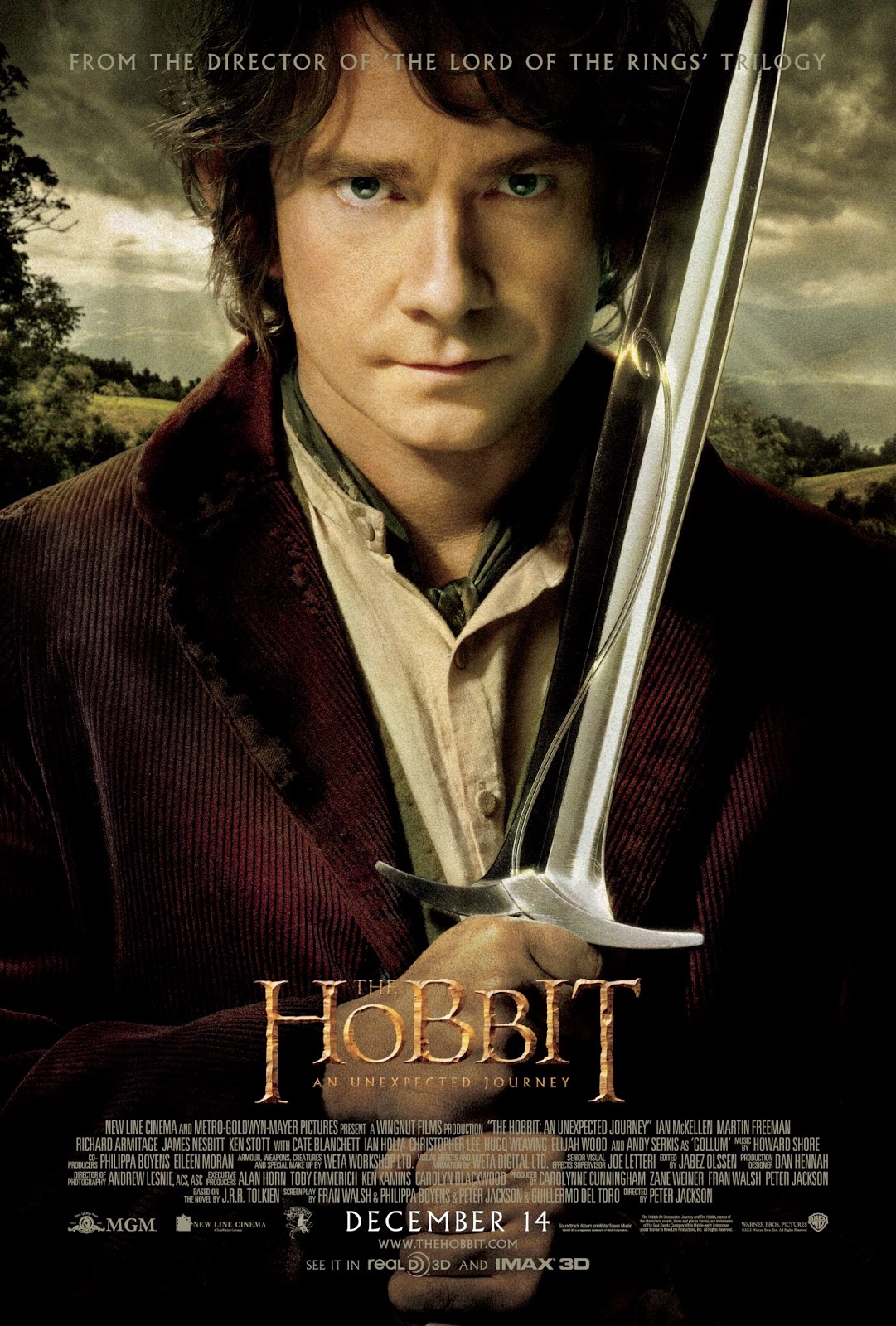
Movie Review: The Hobbit

 Happy New Year everybody! I'm back with my promised review of The Hobbit. This has been a difficult task for me. It was tough for me to write this, so let's just go to it:


 I have always been a fan of sci-fi and fantasy movies. Since I was a kid, my parents (who were also sci-fi fans) instilled in me a love of sci-fi and fantasy. In particular, my parents both loved the original Star Trek (they were both around for the first run in the 1960s) and Star Wars. Naturally, there was a ton of this in the 1980s- and due to their influence I watched 'em with them: Star Trek, Star Wars, Conan, Krull, Dragonslayer, Legend, Alien, etc. I have always been partial to those movies, and my love for this genre has only grown over time.

In 2001, I fell in love with a "new" mythology, that of the Lord of the Rings. I was only familiar with it via the old "The Hobbit" cartoon. When I saw Fellowship of the Ring- well, that was it for me. The movie was simply amazing- I immediately got the books and read them. The movie did a wonderful job of making a fantasy world come to life. Great actors giving the proceedings everything they've got. A fantastic, fully realized world, with a creative mix of practical and CGI, which combined to make you feel like "you are there". A wonderful musical score, terrific action sequences, and a cliffhanger ending. When the movie ended, I wanted to see it again. That moment, as a matter of fact. I felt that way upon seeing The Two Towers and Return of The King (for the record, I love the "endings"of RotK- this isn't wrapping up a movie, but a huge trilogy and the "endings befit this).

The most successful element in the Lord of the Rings trilogy, however, was not the epic action scenes or great special effects, or even the fully realized fantasy setting, though. For me, the movies "got me"with it's characters. Fellowship of the Ring takes its time introducing its characters- the warm moments between Gandalf and the Baggins' family is just wonderful, and sets up so much for later. The friendship between the 4 Hobbits is totally relatable, and each character gets a moment or two to shine. Then, as the other Fellowship members are introduced- I mean, Aragorn is so incredibly complex, even from his first scenes. Gimli is typically humorous for a Dwarf, but again. he's so brave, and he obviously wants to protect the Hobbits. You get regal performances from the Elves that, even if they are not fully drawn (yet), you just "get them". And, of course, you have some real villainy from the treacherous Saruman. Though the movie doesn't really dwell on WHY he switches sides, you just know that this is a terrible blow to the heroes, even before they've started. As for the action- well, that's the thing. The action ALWAYS has our group of heroes as the focus. No matter what happens, from goblins to Balrog to Urak Hai- the fights/action are always done in the service of our main characters. The action is in a fantasy setting, but it is always done realistically- swords and arrows and even frying pans clash in desperate combat. The characters are in danger, and you worry about them- they get hurt, they bleed. The action scenes also change the characters- you learn they have courage, or fears, or connections to the others... Well, all the action in the world isn't worth a damn if the characters aren't at the fore.

In the entire Lord of the Rings trilogy, these characters are front and center. Throughout the din of armies clashing, giant spiders attacking, and a primordial evil returning to the world to wreck havoc, it is always our heroes that you are concerned about. You identify with them, root for them, feel for them. As the stakes get higher in The Two Towers an Return of the King, with bigger and more complex battles / action sequences, it is still (and always) character above spectacle. See- that's the secret- compelling or relatable characters trump every single time. You love Star Wars because you love Luke, Han, Leia, Chewie. In the recent Batman trilogy, you feel for Bruce in a way you never have before (in movies that is), and his allies like Alfred and Gordon are made into human beings (rather than just mere exposition pieces), which you sympathize with. Look carefully, and you'll see that The Matrix starts with strong characters, but that loses out to the special effects in the next two movies, sadly. The SW prequel trilogy also does that, and you can see the poor results for yourself (though it almost recovers by Episode III, but it's too late).

Well, that brings us to The Hobbit. It has been over 10 years since Peter Jackson and company first produced the FotR. Now, everyone was saying that The Hobbit as a book is more lighthearted, not as epic, not as action packed, etc. I wasn't concerned about any of that. I wanted Jackson to bring these characters to life. I wanted to see young Bilbo setting out on his "adventure". I wanted to see how Bilbo formed his bond with Gandalf the Grey. I wanted to see him match wits against Gollum in the darkest cave, despite his fear. I wanted to see Bilbo become a hero, seen as worthy by his Dwarven compatriots. I wanted to laugh, smile, feel some chills and thrills, and feel connected to our characters.

And that's the problem. There are moments where this happens. When the Dwarves first come to Bag End, you can totally sympathize with Bilbo, while still laughing at the antics of his "guests". When Gandalf is trying to convince Bilbo to join their quest, you get where both men are coming from. Radaghast the Brown, for all his weirdness, is interesting and funny all at the same time. The White Council is brilliantly realized, and you get the impression that they are good people (even Saruman!), but they are divided as to what the best course of action is. The Dwarves get a few moments to bond with Bilbo (the Troll scene). And yes, the Riddles in the Dark scene is great fun and thrilling.

However, add that up, and its about an hour. The rest is--- oh no. What have they done? It's all crazy action scenes, filled with POINTLESS fighting and STUPID physical feats. Jackson and company nearly totally forget why they were successful the first time around- the characters are not at all developed, and hence you don't care about them. The Dwarves are, for the most part, just bodies- you don't really get to know them at all. Yes, Thorin is tough, but he's SO damn one-note ("I want to get my home back and I have nothing else to say"). Balin is well played, but he's mostly just exposition. The rest of them are just forgettable arrow fodder. Jackson should have cut them down to a more manageable number (purists be damned! If Jackson could get rid of Tom Bombidil, meld characters, re-arrange events, and still make LotR kick ass, then he could have cut 5 Dwarves and nobody would have noticed). As it is, the audience doesn't really know them, and hence, doesn't care.

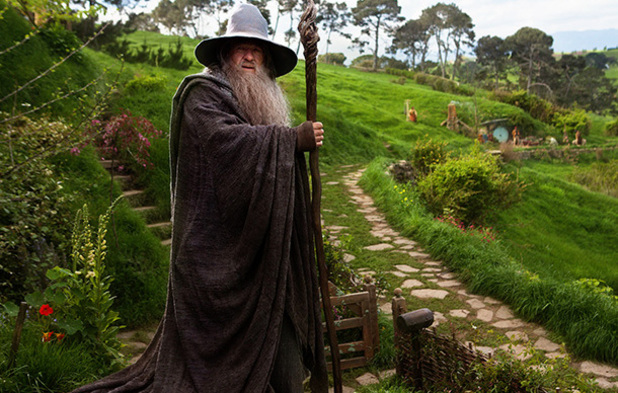
The most unforgivable sin, though, is how they handle Bilbo. Now, don't get me wrong, Martin Freedman is really good at the role. It's not the performance, its the writing. For huge swathes of the film, Bilbo is silent, a bystander at best. If he is "us"- how the average person might fare thrust into such an adventure- well, he isn't developed enough. The 4 Hobbits are developed more carefully in FotR than Bilbo is in this entire film- and he's the only Hobbit and the main character. We don't get to know him, and it hurts the film. Ian McKellan is again stately as Gandalf, but he is given less to do (the White Council scene not withstanding). When Gandalf's biggest laugh is him COUNTING the # of dwarves he has with him after an action sequence, well... it may be humorous, but it is also a sad commentary on how little Gandalf is developed or used here.

Then, there's the staging of the action itself. So much of it is CGI. Now, I wouldn't care IF I had strong characters, but, since I don't, the endless sweeping CGI shots quickly become pointless. When Radagst takes to his sled to drive the Orcs away- it is so frantic, without any sense of geography or any sense of menace or dread, it just looks stupid (to compare, look at the scene where Arwen is trying to escape the Wraiths with Frodo- it is a strong chase scene. Radagast's chase is similar in idea, but horrible in execution). When the Dwarves are fighting the Goblin King and his warriors on the wooden bridges- half of it is the dwarves running wildly in all too obvious CG. Then, when their bridge collapses and they kind of glide on it and hit rock bottom... an obvious disregard for physics and common sense (again- its instructive- look to FotR, at the Bridge of Khazad Dum scene. It is filled with peril, as the wrong move would cause them to fall to their deaths- there is tension in the scene, as the goblins shoot arrows and the bridge begins to crumble- you don't want these characters to fall, and it just feels like that could happen at any moment). This bit is laughable in The Hobbit. By the time the last action scene comes, you're exhausted, because you've seen enough action, but really because you just don't care as much as you know you should.

That is the sad part of this movie- you just don't connect to it as much as you did to LotR. Now look, the LotR trilogy isn't perfect (whatever is, anyways?), but whatever weaknesses it has become inconsequential compared to what the movies accomplished. With The Hobbit, the characters are never developed enough for you to latch onto- you don't know them, so you don't care. That fatal flaw derails the whole movie. The maddening thing is- there are moments that show this COULD have been excellent. The scenes at Bag End, the White Council, the Riddles in the Dark... all are great bits that had energy, momentum, humor, and SOME character beats. Unfortunately, the rest of the movie is just a mess of rapidly sweeping camera shots, overuse of CGI, and stupid action moments that undermine the "fantasy reality" that LotR established. I'm giving this 2 Marks of Chaos, and I'm saddened that I have to.


Now, all is not lost here. There is a huge possibility that recovery can be made. There are 2 more movies here- and the damage can be fixed. Here's what I'd like to see happen, and I hope it does:

1. Bilbo becomes the focus of the next 2. Here, he's the main character, buy he's a cipher for a good chunk of it. Give him some time, show how he grows. Let us see through his eyes, as we saw through Frodo's.  Make him the CENTER of the movie, and that will go a long way to make the audience feel invested.

2. Same for the dwarves. Now, you can't possibly develop them all. But, for heaven's sake, let the audience get to know a few of them. Give them close ups. Heroic moments. Small moments with each other. Moments with Bilbo. Kill a few- just to show that there is real danger here. The audience will bond with them if they feel for them being in constant danger.

3. Speaking of danger- stop the damn CGI sweeping action bits that are more at home in a video game than a movie. Give us close quarters combat. Show these dwarves being brave against Orcs or whatever. Show us some blood, some sweat, some fear (all of which were present in spades in LotR). The action scenes must have real stakes in order to be gripping. It was done for all three LotR movies- it can be done here.

4. Develop the antagonists. I didn't mention this earlier, but the "enemy" isn't developed here at all. LotR had a ton- Sauron, Orcs/Gobblins, Wraiths, Saruman, Grima, Gollum, Urak Hai, Easterlings, Haradrins, Shelob, etc. Here, the enemies are simply wave after wave of CGI sprites to be dispatched. Give them some personality. The Gobblin King had some, but it was too little too late. The Orc chasing Thorin (whose name I can't even remember at this point) is barely seen, and does little to stand out from other Orcs (metal claw not withstanding). In the next one, give us the bad guys- Smaug, the Necromancer, the Spiders. Make them evil, and cunning, and intelligent. Now, since they've casted Cumberbatch to be both Smaug and the Necromancer, there's a great chance of them being strong antagonists, which is sorely needed at this point.

5. Its the little moments. Yes, as I've been saying the whole time, develop characters by giving them time to breathe. The Hobbit seems to be so damned concerned with getting to the next "cool action bit" that a vital element is lost. The best part of the LotR trilogy are the quiet parts, the small moments for reflections, camaraderie, grieving, humor, frustration, quiet acts of bravery or personal sacrifice. Watch RotK and notice how Sam doesn't eat, so that Frodo has more food to keep going. Or when Aragorn looks back at his army, with all seeming lost, and says "For Frodo" so quietly, but with total conviction. Look at TTT and see how Theoden looks to his niece, and with a small look tells her that Aragorn is dead- look at their faces, and see pain and sadness. When Gimli begs Aragorn not to "tell the elf" about "tossing a dwarf"- so funny, but also a great character moment. Its these little scenes that add power and depth. And that is just a few! The Hobbit ignored most opportunities to do these things.

Sorry about the rant. It's just that I love what Jackson and company did with Lord of the Rings so much. I knew that The Hobbit wouldn't reach those levels, nor did I want it to, actually. I simply used LotR for comparison, since they are so closely related and all. The truth is, they left out vital elements which ANY movie needs. Since you never get drawn to the characters, there is little chance that you will get invested in the movie. Now, that's OK for a mindless action movie like Taken, but for The Hobbit, with its great literary and cinematic pedigree, it is almost tragic.

Monday, July 23, 2012

Brief, Brief Review: The Dark Knight Rises

Hey there Chaos fans- the title says it all, so I'll make this quick. I want to do an in depth review of The Dark Knight Rises, but the truth is, I have to see this again in order to "get it all". Everyone knows that Nolan's movies are dense, and this may be his biggest yet.


So, is The Dark Knight Rises any good? Absolutely. Is it better than TDK or BB? Well, I need another viewing. It may be the weakest of the 3, but that's like saying Two Towers is the weakest LoTR- it's still fantastic, just not as good as the other two. At the moment, that's how I feel about DKR- it's a great movie, but I can't be sure how it compares to the previous two- I need more viewings to make a decision.

It has action, drama, great acting, great special effects, moving/haunting music, and naturally, both social commentary and a further examination of "morality" in this world. The movie also has a huge, epic feel to it.

There are some problems... there are a few pacing problems, and there are a few story elements that are awfully convenient, etc.

In my opinion, there is no such thing as a perfect movie. Ever. It's subjective, after all. Long story short- if you enjoyed either of the other 2, you WILL enjoy this one. If you are a Batman fan at all, you MUST see this. Even IF this movie is the "weakest" of the trilogy overall (again, I can't be sure that it is yet), it has some of the best MOMENTS of the trilogy, and the conclusion is so emotional, so perfect for this Batman trilogy...

You need to see this movie. Even if you will always think The Joker is better, you will take many things from this movie. I suspect the more I view it, the film will be even better (both BB and TDK have improved with age).

That's all I have to say about that. I will be back with an in-depth review after I have seen the film again and digested it properly. Until then...

Wednesday, July 18, 2012

Lead-Up to The Dark Knight Rises: Reviewing The Dark Knight

Hey there my fellow Chaos worshipers. I'm back in the bloggosphere after taking a "mini-vacation" with Mrs. Chaos. This morning a ton of reviews have surfaced for The Dark Knight Rises. I have resisted reading most of them (I succumbed by reading only 2 decidedly non-spoliery reviews), but I have read that the overall response is positive. I can't wait till I see it this Saturday. Of course, I'll post a review as soon as the movie coalesces in my mind. But hey, why not pass the time between now and then reviewing The Dark Knight? Away we go...


Personal Background: I must confess... I was a bit apprehensive in the initial lead-up to The Dark Knight. This is before the concept of "In Nolan We Trust". I loved the title, but I was not at all convinced about Heath Ledger. The guy from The Patriot and A Knight's Tale... as The Joker? The most iconic comic book villain of all time? Oh No. I was afraid that the studio was trying to appeal to young audiences only, and that Nolan was losing a battle against the studio... I smelled trouble. Then, they showed that one shot of The Joker...


Yep- that one. I was not thrilled with it. It just seemed weird to me; I didn't get it at the time. I wanted TDK to be as good or better than BB, but at this point I wasn't sold. Then the trailers started to make their way round. I got more excited (the Alfred "Some men just want to watch the world burn" teaser made me feel excited for it). Maybe, just maybe, they will pull this off. Finally, it was July I saw the movie while I was at a business conference in Seattle. The first time I saw it, I loved it, but something was amiss. I saw it again THE VERY NEXT NIGHT (at the Cinearama) and... Bam! I got it. The first time I saw it I missed a ton of stuff- the connections, the symbolism, the characterization, the crime drama elements, and of course the powerful dialogue that generated a ton of shading and nuance. That second viewing did it for me- I realized then that The Dark Knight rises wasn't just the best Batman or Comic Book movie, but indeed an instant cinematic classic that has changed/influenced whole genres of film-making .

Basic Plot: Batman has been working for a year in his efforts to fight crime on the mean streets of Gotham City. Public opinion seems to be divided- some favor the Batman as a hero, whilst others see him a lunatic no better than the criminals he fights. However, there can be no denying Batman's effect- the criminal underworld is weakening, and others are being inspired by Batman's example.

One such person is the new District Attorney, Harvey Dent. Known as Gotham's "White Knight", Dent is an honest, forthright, and crusading politician who is serious about making Gotham a safe place for decent people. Batman begins to work with Dent, as well as Lieutenant Gordon- in an alliance that seeks to root out the mob for good.

However, as they put the squeeze on organized crime, a new criminal emerges, far different from the well dressed crime bosses and hired muscle thugs. This criminal is The Joker- a lunatic who dresses in clown make-up but is both vicious and insane. The mob turns to The Joker for help against Batman, Gordon, and Dent- but unfortunately for all the citizens of Gotham (criminal and crime-fighter alike)- The Joker has his own agenda that will bring chaos, anarchy, and death to the entire city.

What ensues is a deadly cat and mouse game between the Dark Knight and his allies against the unbridled mayhem that The Joker unleashes. As casualties begin to mount, Batman learns that he is not only fighting for Gotham, but for his very own soul (and those of his allies) against a maniac who seeks nothing more than the total corruption and degradation of all symbols of good and morality.


Spoilers from this point on!!


Themes/Concepts: This is where the real meat of The Dark Knight comes into being- this is not a simple comic book movie. The Dark Knight goes beyond the simple trappings of masked good guy fights masked bad guy. This movie makes references to crime dramas, 9/11 and terrorism, ancient and current history, the concept of free will and individual choice, and much much more.

I won't touch and all of them here, as I don't want to bore. I do wish to go into what I think is the most important one for the entire movie series:

The themes of Batman Begins are continued and challenged in The Dark Knight. At its core, Batman Begins is about the creation of a "moral code". Bruce learns his concept of right and wrong from many individuals and events. His father teaches him simple ideas about how one can learn from failure as well as humility. Bruce learns the brutality of violence on the streets, which threatens to overwhelm him (to this very day). He learns about the importance of family and compassion from Alfred (and Gordon). He learns about what justice is from Rachel (and Gordon). He also learns the power he has, and what his aggression can be channeled towards by Ra's al Ghul. From all of those sources, Bruce creates a moral code for Batman, why he does what he does and just how he does it.

These concepts in Batman Begins seem rather innocent and tame compared to what The Dark Knight has to say about morality. See, according to The Dark Knight, it's one thing to develop a "moral code", but its another thing to actually fully live by it. Can Batman, a masked vigilante who uses terror and "beats criminals with his bare hands" actually live up to his code and inspire good at the same time? At first, it seems that Batman can do just that (though he's not happy with the copycat Batmen, but hey)- Gordon, Rachel, Alfred, and Fox have all aided him, and it now appears that, with the growing strength of DA Dent, that he may finally be inspiring the good people of Gotham to stand up. He even expresses the hope that he won't even need to be Batman anymore, if this success continues.

And therin lies the rub. While Batman and his moral code are inspiring good, it is, in Newton's terms, inspiring an equal and opposite reaction. That is what The Joker is all about. He is being deliberately disingenuous when he says he's an "agent of Chaos" without a plan. The Joker does indeed have a goal- even if he takes many (unpredictable and shifting) paths to get there. The Joker wants to show that morality is "a joke". People talk about doing right, but when push comes to shove, they would do anything to live, including breaking their moral code. The Joker seeks to show that morality doesn't actually exist- the world is meaningless and random, and that any hope of us imposing order on it will fail, one way or the other, in fact, it is at least pathetic hypocrisy, and at worst INSANE to try to, according to The Joker. This is reflected in everything The Joker does- getting criminals to kill one another for money, trying to get innocent people to murder one another to survive, etc.

It is an amazing way to continue the themes about Batman's morality. As Batman, Dent, and Gordon become more successful at making Gotham a more "moral" place, The Joker takes it upon himself to do the opposite- to show that those morals aren't worth the effort- that the average citizen will drop them "at the first sign of trouble". The Joker doesn't care about the mob, the money, or anything else except "sending a message"- that there are no rules. Of course, The Joker wants to show that to Batman, Gordon, and Dent in particular, as they are the strongest advocates of order, opposed to Joker's chaos. The Joker goes about trying to "tempt" the three to break their moral code- and he does so by offering two choices- each worse than the other- thereby making them choose the lesser of two evils each time, but they are forced to chose evil nevertheless. Which victim should Batman save? Should Gordon continue to work with corrupt cops in order to serve the common good? Should Dent continue his crusade even if that puts Rachel in danger?

And it is Harvey Dent that suffers here. Dent is symbolic for Gotham itself (not Batman). Dent is literally torn in half by this titanic battle, as is the city. Dent is a good man, but due to The Joker's machinations, Dent crumbles. The Joker weakens Dent's faith in Batman, kills Rachel, and plants the seeds that Gordon is responsible. Dent believes in fairness and justice, and The Joker twists that against Dent, breaking his spirit, and bringing him to that place where he will allow "random chance" to take the place of his ethics. Hence, he becomes Two-Face- seeking revenge against all those responsible for the tragedies that befell him- both criminals and his previous allies Batman and Gordon. The Joker has thus proved his point- that a good man can be broken, as can a city, as can any sense of morality.

But, what of Batman himself? The Joker discovers at the end that Batman himself IS incorruptible. Whatever mistakes he made in Batman Begins ("letting" Ra's die), Batman has his code and he's sticking to it, even if that means sparing The Joker's life. If the movie had stopped there, it would have been fantastic, but it goes further still- The Joker leaves one last "lesser of two evils" choice for Batman- one that may not corrupt him, but may well ruin him anyway- the fate of Dent/Two-Face. The conclusion of the movie is the final accounting between the three "heroes"- Batman, Gordon, and Dent. What has been at stake the entire movie is laid bare there- and the consequences are tragic. Batman saves Gordon's son from Two-Face's wrath, but Dent falls to his death in the process. The final choice to be made: if the public learns that Dent went mad, all the gains that the trio made will be undone. But Batman makes another choice- he decides to take the fall, allowing himself to be blamed for Dent's crimes. As Batman says, he is NOT a hero, as Dent HAD been. Therefore, it is Batman that is expendable, while Dent's reputation and "symbol" will endure. It would appear that Batman snatched victory from the jaws of defeat, even if it makes him the outlaw instead. Perhaps The Joker won after all then?

The other major concepts and themes tie into this, one way or the other. Alfred deciding to keep Rachel's confession a secret from Bruce. Batman keeping his word to Lucius Fox about NOT abusing power. Gordon's relationship with his family and with other cops (corrupt or not). Heck, even the criminals are nuanced here: Sal Maroni is clearly not pleased that the Chechen mob boss hired The Joker to begin with; on the ferry, it is the biggest thug who refuses to go along with The Joker's game, showing great moral courage for a criminal. Yes, from top to bottom, that is the message here... Is morality a real choice? Is it a fiction? Or is the universe truly random, cruel, and meaningless.

How a "mere comic book movie" managed to ask these types of questions while supplying answers that are quite uncomfortable, sad, and even painful, is simply amazing.

Characters/Acting:

Christian Bale does a tremendous job in The Dark Knight. Many have said that he is overshadowed by Ledger, but it is the nature of this particular beast- Batman is the Yin to Joker's Yang. Truth is, Bale sees exactly what is required from him. In Batman Begins, Bale is great at showing how Bruce develops into Batman, and he brings a ton to that process. However, in The Dark Knight, the movie isn't solely about Batman himself- we already know him and what he does and why. This movie is about Batman as a symbol- how he impacts/inspires Gotham. He inspires people like Dent, but also people like The Joker. What Bale does with this is amazing- he wants to be a great symbol, but he can feel it is spinning out of control- his symbolism may not be having the desired effect, and it is taring him apart inside. Thus, he becomes more desperate to stop The Joker, and he comes dangerously close to crossing the line, but he stops just short, which Bale measures perfectly. Also, his grief at Rachel's death is great, but not overwhelming. Now, that is the difference between him and Dent. Rachel's death consumes Dent, but not Bruce- a vital difference between the two characters.

Naturally, Ledger gets all the buzz for his performance as The Joker. Now, some attribute this to his untimely passing, but quite frankly, the role was performed, regardless of his death. Ledger's work is nothing short of extraordinary. He takes the character and combines him with Hannibal Lector- making him a realistic, scary, and unsettling performance. He's not a comic villain, he's a maniac that could exist in the real world- a nightmare that actually exists. Ledger's voice, facial tics, physicality, and his eyes all combine to make his Joker a true, vile, almost unhinged threat. The performance is so odd, so well planned and thought out, that it is simply awe-inspiring. Even better, Ledger's Joker is truly the "Agent of Chaos", seeking to pervert any concept of ethics or morality. In many ways, The Joker is like the devil, putting our heroes in horrible situations just because he can, hoping to see them damn themselves in the midst of carnage and terror, or as he likes to call it, "social experiment". The truth is, Ledger is electrifying every second he's on screen, and he takes huge risks, particularly how he re-tells his (false) origin twice, his conviction in the interrogation room, and his dressing as a nurse to infiltrate the hospital. His scene with Dent is noteworthy, as he tells Dent exactly what he's really all about. His final scene with Batman is also great, as he recognizes that Batman may well be "incorruptible". Yes, Ledger is that damn good. However...

The real, true standout isn't Ledger, despite the posthumous reputation he gained for his role. While is Joker is nothing short of awe-inspiring, it is actually Aaron Eckhart who gives the best performance in the film- his Dent is smart, charming, brave and scared in equal measure, a good man with hopes for the future, but also filled with doubt. Harvey Dent is the true heart and soul of the film. Indeed, Harvey mirrors both Bruce himself and Gotham as a whole- in obvious and subtle ways. The story of The Dark Knight is Dent's story. He is, at his core, a good man who wants to make Gotham safer. He wants to stand up to criminals, and restore justice to Gotham- the "White Knight" indeed. Unlike Batman, whose morality is shades of grey, Dent's is simpler- black and white, good or evil. However, when confronted by the madness of The Joker, Dent becomes scared, and his simple moral beliefs are put to the ultimate test. Terrified that this lunatic might destroy all that he, Batman, and Gordon have done, Dent becomes ever more desperate. His anger at Batman is incredible when Batman says he will surrender to authorities to appease The Joker- with Gordon "dead", Dent is scared that he will be left alone to fight these thugs and lunatics. Eckhart plays it so well: Dent is trying to do right, but can't do it alone, and the actor captures it perfectly.

Like the other characters, Dent misses The Joker's point until its too late- The Joker is trying to tear down this "false morality" that Batman and company are trying to impose on Gotham. The Joker wants to ruin all symbols, show that morality is a  "joke, dropped at the first sign of trouble". The Joker wrecks Dent mentally and physically, and Eckhart shows real depth in showing how damaged Dent has become- compromising his morality in the process. The fear and desperation to stop crime has literally ripped Dent into two, and the actor shows that to the audience without going over the top. His performance is tragic and nuanced- his was the toughest performance and Eckhart pulls it off in spades. In particular, when he tells Gordon and Batman "You thought we could be decent men, in an indecent time... The world is cruel, and the only morality is chance...Unbiased. Fair."- the line is so potent, and Eckhart delivers it with total conviction, angry, bitter, and broken. It's a huge performance in a movie with huge performances. 

Last, but certainly not least, I would be remiss if I didn't mention Gary Oldman's take on James Gordon. Oldman was good in BB, but here he really comes into his own. Gordon is the everyman, he represents the audience here. He's a family man, a good, honest guy. However, unlike Dent who's views are in black and white, and unlike Batman who operates in a very grey area, Gordon is practical. He wants to believe people are good, though he knows he works with a few bad cops. He has no choice, as he has to "do the best" with what he has. He's much more practical, and Oldman plays him as a smart but humble cop, willing to make sacrifices to save his city. But The Joker snags him too, by making him feel guilt over Dent's maiming and slide into despair. Oldman plays that so well, Gordon driven to save Dent at the expense of just about everything else. In the last scenes, Oldman's narration is stirring, and you can see in those final scenes that Gordon and Batman are truly comrades in arms, a feeling that has been missing in previous film adaptations.


Special Effects / Action Scenes: This movie clearly ups the ante in terms of action, though this is not purely an action movie as some seem to think it is. It is a drama more than an action movie, but the action scenes are fantastic. The Joker's initial bank heist is action packed. The car chase through Gotham which sees the Bat-Tumbler destroyed is considered legendary now. Tons of places explode, and all kinds of carnage are seen or implied. The final battle at the docs against The Joker is dizzying but effective. The action serves the story and the characters, not the other way round, which is important. Look at the interrogation scene as the best example. Great stuff here.

Lasting Legacy:Well, where to begin here? Of course, most cite the death of Heath Ledger in January 2008, stating that his performance here has taken on a supernatural quality as a result. Others cite the box office- The Dark Knight was a box office behemoth, becoming one of the biggest grossing movies of all time. I like to think that this movie set a whole new standard for what a comic book movie can be. Serious themes, symbolism, contemporary critiques, "realism", etc. The Dark Knight combines psychological thriller, with crime drama, and comic book characters for an amazing, genre busting blend of a movie. Now, I don't think that every comic book movie needs to be like this- there's room for The Avengers and The Dark Knight. However, there can be no doubt that The Dark Knight changed the rules. Talk about legacy....


And now comes The Dark Knight Rises... I cannot wait...