Hey there my friendly neighborhood warp entities! Old Man Chaos is back in action just as I promised.
Almost a year ago, we learned of the passing of George A. Romero. While he was 77 years old and had lived a full life, I was very saddened when I saw it on my phone. If you have read this blog a bit you'll have noticed that Romero's dead films have a special place in my heart. Heck- my Plague Marines and Plague Zombies draw a lot of inspiration from those films!
I was lucky enough to have met Romero once. It was at NY Big Apple Convention at the Hotel Pennsylvania. This was I think in either fall 2005 or 2006 (I can't quite remember). Now this was before "Comicon" became the huge draw. There were plenty of smaller cons then (and now, but Comicon is obviously just huge). At any rate, George Romero was signing autographs. Naturally, I knew exactly what I wanted him to sign- a mini poster for Dawn of the Dead. When I finally got up to him I couldn't believe how tall he was. He was also very friendly and laid back. As he signed my poster I sheepishly asked him if there was going to be another Dead film after Land of the Dead (a film that I like quite a bit actually). He smiled and said something akin to "we shall see what happens". Now, he must have been asked that question 10 million times by every
film and horror geek out there. But at no time did he show that. He was a friendly gentleman. Period.
Later in the Con, my brother and our friend Pete went outside to have a hot dogs and soda. While we were out there, Romero came out all by himself for a smoke. I wanted to go over and say "hey" but Pete was like "Let the man smoke in peace". Pete was right and so I left him alone. But it was awesome nevertheless.
The autographed mini poster is one of my most prized possessions. No, it has no certificate of authenticity. It is not numbered. Nor is it an original poster or something. None of that matters. This is special to me. It is now occupies a central place in my man-cave.
A while back, I did reviews of both NotLD and DotD, both as films and their interesting reflections on the times in which they were made. NotLD stands not just as a zombie film, but as a reflection of the uncertainties of a changing world (the 1960s), while DotD is a satire of our media and consumer obsessed society (the 1970s). It is those things for me that elevate the films beyond simple horror films. They have larger things to say about both history and the human condition. That makes them timeless.
After I watched Dawn of the Dead, I immediately sought out Day of the Dead on VHS. And immediately, I was disappointed. I really didn't like the film all that much. The movie lacked both the originality and action of the first two films. I recall watching it, hearing a lot of yelling and indiscriminate cursing, a fairly blood soaked finale, and then... a stupid ending. At the time, it was bland in comparison to the two that came before.
That was years ago, while I was in college. But of course, as one gets older, things change. A refined movie-viewing palette develops. New experiences and knowledge. Perhaps a growing amount of cynicism. But several years later when I revisited it I discovered that it was actually a powerful ending to the trilogy. Now some fans say Day is the best. I won't go that far. NotLD and DotD are superior films. But Day has a lot to offer, again about the human condition and the time period in which it was filmed. In previous reviews I went all out reviewing every nook and cranny of the movies. I won't do a beat for beat review here. Instead, I'll focus on some of the larger points that are threaded throughout the film and the trilogy as a whole.
Reaganism and the 1980s
Like the other two Dead films, this movie is an attempt at reflecting the times Romero was living in. This one is a bit different though, as it was made in the middle of the decade rather than at the end of a decade (which means he's commenting on things unfinished as it were). What exactly is he commenting on?
Well, in the 1960s America was going through a variety of identity crises- we were a changing nation in the 1960s, and NOTLD reflected the uncertainties of those changes. The 1970s saw America become helpless- ending of Vietnam, Watergate, Oil Crisis, etc. It also saw America become a lot more pessimistic and cynical.
The year 1980 became a bit of a turning point for America. The serious, though flailing, Jimmy Carter ran against Ronald Reagan, a Hollywood actor turned politician, promising to restore America via conservative programs. Reagan promised he would cut government spending, whilst increasing the size and power of the military. Trust Reagan, and he would solve the problems. Obviously, Reagan won that election.
At that point, "Reaganism" swept America. Liberals held Reagan in disdain, but also felt his vision was both flawed and dangerous. As Reagan increased the size of the armed forces, some Americans and Western Europeans alike thought he would unleash World War 3- massive protests were held in both America and Europe when Reagan wanted to deploy new missile systems in Europe. His rhetoric was also incendiary, calling the Soviet Union the Evil Empire. Finally (and importantly for this film), Reagan called upon scientists to create better (defensive?) weapons, such as the Strategic Defense Initiative (SDI- popularly known as Star Wars).
But Reagan's pro-military stance did more than that. It permeated American culture. American films became more violent, more "gung-ho", if you will. Rambo was a popular hero, taking us back to Vietnam and "winning" it retroactively. On TV, cartoons such as G.I. Joe promoted both America's military and the idea that shooting is the answer to any problem. Jingoism was omnipresent in American pop culture.
This is the world of Romero that he is commenting upon in Day of the Dead. A small group of soldiers and scientists have been ordered to solve the "zombie problem". The soldiers are certain of their guns alright; however they are callous, crude, etc. Obviously Romero is criticizing Reagan militarism- for Rhodes, Steel, etc., shooting is the answer to the problem. The scientists don't escape Romero's criticism either, as embodied by the rather amoral but brilliant Dr. Logan. It is clear that Romero thinks that Reaganism isn't going to solve anything, but rather, make it all worse. Neither the soldiers nor the scientists can get us out of this jam, despite what Reagan says. Humanity's days are numbered, and not all the bullets in the world are going to change that.
Is It Just Me or Is Everybody Crazy?
Something that escaped me on first viewing but is now something obvious is that every single character but one is crazy. Yep. Batshit insane. All but one. This is what makes the film difficult to watch, as opposed to the previous Dead films. The world is effectively over- Zombies outnumber humanity by the hundreds of thousands to one. There is simply nothing left. All that's left of humanity might well be in that missile base. That the base is filled with trigger happy soldiers and oblivious scientists make it all the sadder and more pathetic.
As I said, the film must be understood from that point of view. Humanity is dead and the few stragglers are simply crazy. How could they not be? After all of this, how could they not be unhinged? Let's look at Rhodes for example. The death of his superior has put him in charge. Rhodes screams, he threatens, he yells, waves his gun, even at the most innocuous of things. If the zombie apoc hadn't happened he'd be a military prick blowhard. But since all went to hell, Rhodes is just about shattered, and it clearly shows.
Naturally, Dr. Logan (AKA Frankenstein) has also seen better days. It is obvious he is a smart man, but has lost touch with reality. He wants to understand the zombie problem- but at this stage what's the point? He is interested in their memories, and hopes to domesticate them, zombies like Bub. It doesn't seem to register that feeding Bub parts of dead soldiers might be a bad idea for many reasons. Nor does it register that there is no chance of actually solving the problem. Logan just seems interested in his macabre experiments, nothing more or less.
What about John, the chopper pilot? He seems sane on the surface, and he understands that there is no solving the zombie plague. His answer is that they should all forget the past (keep it buried in the silo he basically says) and just live their lives on an island some where How can one do that in the midst of hell on earth I'm not sure- hence I think John isn't too tightly wound either. His belief that the zombie plague is God's punishment against man doesn't make him sound any saner.
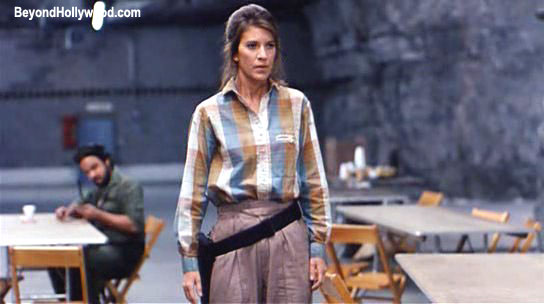
Surely the heroine and main character, Sarah, is sane. Again, on the surface she appears to be, but again this is not true. Sarah as it turns out truly believes that a solution can be found. That there is a way to reverse the effects of the zombie plague. She puts up with both Rhodes and Logan, hoping that a cure will be found. Despite her skills and demeanor, she is crazy if she really expects to end this. Her hallucinations/dreams show that she is falling apart as well.
No, the only sane character left in the entirety of the base is McDermott. Why? Because his solution is to drink booze. He is always wanting a drink from his flask throughout the film. He stays with John because he's the least insane and is a capable fighter (to protect McDermott). But the booze helps him cope with the situation- I think that's a rational response LOL. And if this lush is all humanity has left then you can appreciate Romero's sick sense of humor.
Is That Really The End?
One of the things that bugged me was that, once again, our main characters escape by helicopter, this time to a sunny island and Sarah, McDermott, and John live happily ever after. Night's ending was nihilistic, with all the main characters dead. Dawn's wasn't much better- they leave on a helicopter without much fuel left- they won't be getting too far. But this ending seems false- we leave it all behind just like John says and they're all OK?
Perhaps the ending IS false. As you will have noted, Sarah has been plagued by nightmares the whole time, earlier in the film. At the end, just before she gets into the helicopter, a zombie jumps out at her and then... she awakens on that beach. Suppose the zombie really did get her, and this last dream of a happily ever after is just that. It's not real. Her irrational mind is trying one last defense against the inescapable. If that is true, perhaps no one makes it out of that base after all. I do not know what Romero intended, but my hypothesis makes it fit better with Romero's other endings. (It still bugs me though).
At any rate, thus ends Romero's original Dead trilogy. Now he's gone on to make a few more Dead films, but they are all weaker efforts- even Land of the Dead, which I do enjoy, is not on the same level as these three. No contest. However, these three are secure, having originated a genre of film whose power today is undeniable. But it wasn't just blood and guts that made Romero's films. It was the subtext, the combination of real world issues in this apocalyptic setting that makes Romero's films worthy of being called "great". Day of the Dead, though not as strong as the previous two, continued that trend, if in a rather bleak and even more hopeless way (despite its "happy" ending). These three films are commentaries on the times in which they were made, and that makes them all the more unique and special.
Showing posts with label Night of the Living Dead. Show all posts
Friday, July 27, 2018
Wednesday, October 21, 2015
Examining a Movie: Dawn of the Dead
Since Halloween is just around the corner, I figured I'd continue what I started in the previous blog. Last time we took a look at the horror classic, Night of the Living Dead. This time, we can take a gander at its sequel, Dawn of the Dead. So, away we go...
It wasn't long after I saw NotLD for the first time in my sophomore year at college that I naturally sought out George Romero's sequel, Dawn of the Dead. I got it on VHS- a 2 tape set. (Sadly, I got rid of it when I got the deluxe DVD version- wish I hadn't). And, if I thought NotLD was a masterpiece, well, let's just say I was just floored by DotD, and then some.
First, some disclaimers, once again. Like last time, you have to accept a few things going in if you're going to enjoy the movie. Once again, this is an independent film (one of the most successful of all time as a matter of fact). As a result, there are still some wonkiness to it, though nothing like NotLD. Further, Romero gives himself some free reign to put in a little bit of weirdness- some odd dialogue choices and such. To me, they only add to the "Our world has gone to hell" idea. Finally, the special effects- they were revolutionary for their time, but as compared to more modern fare they are lacking. Again- consider the time and how this was pioneering work. Last, you should know there are multiple versions/cuts of the film- the extended cut is the best one, and my review is based on that.
The same rules also apply- you should watch it alone or with a significant other (though this does work better than NotLD in having a fun group to watch it with- but still). It should be watched late at night and in the dark. Again- you want all the atmosphere that you can get. You won't regret it.
Spoilers below, FYI
So with that, let us now turn to my review:
Building on NotLD:
The first thing to recognize about Dawn is how it increases the stakes and the scale. This movie takes the ideas presented in Night and just expands upon them enormously, taking them to their logical conclusion. The zombie menace continues to grow. No one is safe, and the fight against them is taking its toll on both individuals and society. Things are starting to fall apart, as the zombies just keep coming. The movie shows this to great effect several times. The cops and National Guard raid a project in Philadelphia and chaos ensues. You don't see the rest of the city, but you just know this is what is going on everywhere. Many of the cops and lawmen are scared and can see they are fighting a losing battle. One goes crazy, shooting at everyone (zombie or not). Another commits suicide rather than face the hell that the world has become.
We are witnessing a world in it's death throes. Via what our 4 main characters see and what we see on the television, little by little we see the zombies taking over. When our heroes fly out of Philly, one of the bigger building has its lights still on, but they start going out quickly floor by floor- ominous. Once at the mall, where our 4 believe they are safe- we just see more and more zombies appearing. By the end, no one is airing anything on the TV, and there are more (ever more) zombies outside. It is very clear that there is almost nothing left. It truly is the Dawn of a dead world. The scale of this film is nothing short of epic.
The plot is once again straightforward, but is deceptive in its simplicity. Steven and Fran are a couple (not married but together) who work for a TV news station. They are seeing firsthand that the world is vanishing right before their eyes. Steven decides that they are going to "run". They plan to steal a traffic report helicopter and escape- to anywhere. But Steve knows that this is dangerous, and could use some help/protection. His friend Roger is just such a person. Roger is in the National Guard, equipped with a rifle and trained. Roger isn't sure he wants to "run", but after the horrors he sees in the projects, he decides to bolt. Before he does, he meets another guardsman, Peter. He offers Peter the chance to leave with him. The four then take off on the helicopter. It seems everyone is either dead or running out now.
Along the way, our heroes see the end of the world going down in flames, and they get into some tough spots, etc. Finally, just as their fuel is running low, they spot a shopping mall. They could stop, resupply if possible, rest, etc. But once in the mall, the group begins to think- what if they could stay? The mall has everything that they could ever need after all. If the world is a ruin, at least they can live out their last days in comfort and relative abundance. They just have to secure the mall from the zombies- a task easier said than done, naturally. What follows is a struggle to survive in the worst horror imaginable- a world of the dead, with no hope at all.
History:
Like Night, Dawn is very much a reflection of its times. If Night was a mirror showing how anxious Americans were afraid of the social changes of the 1960s, then Dawn does the same for the 1970s- showing America's growing cynicism, selfishness and detachment from the world's problems.
Let us start with the rather cynical attitude that was forming in the American consciousness in the 1970s. The decade starts off with a continuation of the problems of the sixties, though some of these problems have receded (not solved, just no longer at the forefront). However, any chance that America might find some social peace falls apart with the Watergate scandal. Watergate, a word now synonymous with government corruption, rocked the United States to its core. President Nixon, who was elected by saying he would restore law and order, was basically caught doing many illegal things, and using his power to cover them up. The scandal lasted for over a year, till Nixon finally resigned. But the damage was done. Americans now believed the very worst of their elected leaders. To make matters worse, we seemed to be losing the Cold War. The Soviet Union was resurgent, and the Middle East was spiraling out of control. Oh- and of course the United States lost Vietnam ("When the dead walk... we must stop the killing, or we lose the war" is obviously a reference). It seemed we were powerless, and our leaders had failed us utterly. As a result, Americans treated their government with a cynical attitude (and, to varying degrees, have ever since).
America has long been known as the land of opportunity and the land of plenty. America generally had anything and everything a person could want or need- and in almost wasteful abundance. 2 cars in every garage? A suburban house with a pool? A color TV? Video computer games? You name it- Americans had it. Since the end of World War II, Americans were far more prosperous than just about any nation on earth. America's got it all. But by the 1970s, this was starting to change. The economy was starting to go downhill. It was known as stagflation- wages were stagnant but prices were inflating rapidly. People had no choice but to buy LESS because everything was going up. Further, gasoline became a major problem as on a few occasions in the 70s, the Middle East reduced oil production (the Oil Shocks). This hurt America even further. Americans wanted consumer goods, even as they couldn't afford them as they had in the past. This made Americans anxious and even selfish. Each American would scramble to "get theirs", and to hell with everyone else.
As these economic and political problems mounted, social issues remained unsolved as well. African-Americans, though they accomplished much in the previous 2 decades, found their Civil Rights movement was slowing down, and blacks now faced "softer" forms of discrimination. The feminist movement also challenged society, though the fight over abortion added new dimensions to this, tearing the women's movement apart. Americans, who seemingly had been through enough in the 1960s, had no stomach for all of this. America ignored these and other problems, essentially sweeping them under the rug. This was the era of Disco and Drugs- cynicism and selfishness combined- causing Americans to lose touch with these issues, and perhaps, their true selves.
As we shall see, Dawn does just what Night did a decade earlier. It serves as a nasty reflection of the 1970s. Our heroes act in selfish ways, and they are laced with cynicism. They believe (rightly) that no one can help them- government has failed, so they have to just take care of themselves. It is their (understandable) desire for goods and comfort that cause them to try to stay at the mall, despite the risks. It is their growing detachment that make them abandon the world to its fate. These 4 characters are Americans in the 1970s. We understand why they feel this way, even if we can't quite agree with/believe in what they are doing.
And the zombies? well, they are consumers too after a fashion, aren't they? With that in mind, let us turn to the zombies themselves...
The World Is Ending- and Its Bleakly Funny:
Indeed, once the characters get to the mall, the joke (and it is a bitter joke) is that the people taking refuge in the mall are just like the zombies- they are consumers, drawn to the mall. At several points, Peter, Steven, and Fran make it abundantly clear that the zombies are us. They still have some semblance of memory- and they remember shopping. As Steven says coldly "This was an important
place in their lives".
The joke continues- as the zombies aimlessly walk around the mall, the connection couldn't be any more obvious. They walk around, looking at the merchandise, gently moaning or sighing as they move on to the next display counter. Even as humans run past them, many zombies continue to gaze about the mall, looking for that perfect thing to buy. The zombies are us- mindless consumers looking for the next purchase, with no thought for the morrow (or anything else, for that matter). This is clearly a satire. While Night wanted to scare with its apocalyptic scenario and tough moral choices, Dawn wants to scare, but it is also mocking us. The movie itself never becomes a joke (though one scene almost breaks the 4th wall), but it is poking fun at us nonetheless. The scares and thrills are still present, but there is satire as well, and Romero makes it clear for all to see. We are consumerist zombies, dead to anything else but the desire to "consume".
The main characters desire what is in the mall, but the pace is crawling with zombies (hostile shoppers?). Our heroes will have to kill ALL the zombies AND seal the doors in order to secure the mall for themselves. With almost clockwork precision, they go "on a hunt", shooting all of the undead and blocking the doors. As the hunt ends, the music becomes dramatic as our heroes look over the mall- the place is littered with the bodies of the re-killed zombies. It is a grim moment. You actually begin to feel bad for the zombies, in a twisted way. And our heroes actions- driven to such destruction for material comfort- is rather unsettling for us. But would we be any different?
But the joke isn't yet finished, for now we must consider the climactic final battle. And it isn't against the zombies exactly. Despite the fact that the world is quite dead, there are some scattered survivors. A new group descends upon the mall. They are "raiders"- bikers- some may be criminals, others ex-army. Whatever they are, they blow their way into the mall like marauders, plundering and destroying. The zombies follow them in, leading to a brutal 3 way contest between our heroes, the raiders, and the zombies. The bikers act with a reckless abandon and brutality (and half crazed, judging by their actions), and they are better armed and better coordinated than our heroes. Within moments, the mall is a deathtrap for all involved, human and zombie alike. Though you love our heroes, you can't help but see what they did to the zombies is now what the bikers are doing to them. The bikers steal what they want and then run out (they apparently survive on the road). All the work our heroes had done to secure the mall now lies in shambles, and it can't be fixed. The zombies are in the mall once more, and our remaining heroes are screwed. It comes full circle now, both the plot and the satire. The humans are clearly WORSE than the zombies.
The movie certainly works as a satire of American consumerism and selfishness. The entire tone of the movie is filled with it; there is more humor here than Night (which is totally devoid of humor), but it is a black, gallows humor at best. The scene that almost goes too far is when the bikers take pies from a mall bakery and start to throw them at the zombies. The satire has now become absurdest comedy. However, before this zombie pie fight threatens to derail the movie into silliness, Romero wisely goes back to the horror of the situation, with graphic carnage on display at throughout the battle. However, the pie fight remains a wink and a nudge to the audience as to the true message of this film- our mindless consumerism is a cruel joke with no real point.
The tone of the movie is satirical, and in a way the actual filming itself was as well. Romero went all out here, with tons of neon bright blood spraying everywhere, big action scenes, etc. Again, there is more at play here. The movie is itself making a comment on "America: Our stuff is bigger and better"- thrilling action, buckets of blood, tons of zombies- everything is more more more. The movie takes on an almost comic-book quality with splashy scenes of stylized violence and incredible feats; Our heroes almost effortlessly cleave through the zombies in their initial purging of the mall, it could very well be an American action movie blockbuster. Again, this "super-size" approach makes not just for a great movie, but it also serves the satire of consumerism to a tee.
They'll Tune Out!!
Also serving for satirical purposes is Romero's strategic use of television. In Night, Romero understood that Americans looked to TV as a comfort. Even as America was becoming unglued in the 1960s, Americans could tune into Walter Cronkite to reassure them, or tune into their favorite program to help them relax or forget their problems. Night used that to terrific effect, our characters watching the TV and taking comfort in the newsman's words.
Romero pulls yet another rabbit out of his hat for television's role in Dawn. By the late 1970s, Americans grew cynical about lots of things. As it turns out, TV played a huge role in that. As the news continued to push the issues of Watergate, losing Vietnam, and more- Americans became ever more jaded and bitter. By this point, Americans had had enough of the news. They turned away from it as much as they could. What's the news? Who cares- its all bad.
In our first scene, we meet Fran in the news studio of where she works. The place is chaotic, to say the least. The newscaster is talking to a government official about the zombie emergency. As the official makes his statement, TV crew members begin to yell and boo him- right on the air. Even the newscaster yells, saying that people don't believe the government ("... and I for one don't blame them" he shouts). More booing ensues. The guy can barely get a word in edgewise. It is clear from scene one that the people have lost all faith in the government. The booing studio workers certainly have Watergate on their minds. And remember- there is a crisis her of epidemic proportions- and they won't listen to the government.
But Americans have also lost faith in the media itself. Fran finds out that the "crawl" on the screen, showing "rescue stations", has out of date information. Most of those "rescue stations" have been overrun. Fran decides to stop the crawl- she doesn't want to send people to rescue stations that don't exist, as that would be sending them out to die. Her boss however, yells at her, trying to get her to put the crawl back on. Fran refuses. The boss says without the "rescue station" info the people will "tune out". Yes, he doesn't care that the info is inaccurate and could cause deaths. He only wants viewers. Right here, you lose faith in the news as well, reflecting American sentiment of the mid 1970s.
There is more though. The next time we see a broadcast, our heroes are watching TV in the mall- the news broadcasts have been getting further and further apart (unsettling in its own right). The person speaking is yet another government expert. He has an eye patch on (of all things), and he stands at a podium (where we don't exactly know) with the sound of flashbulbs and reporters grumbling. He yells at them, complaining about the reporters' criticism of him and the government. This is not comforting, to say the least.
The broadcasts become more infrequent. The next (and last) broadcast we see is the same expert talking to yet another news host. The background is a mess- a ladder, ratty curtains- its not so much a studio as it is a shambles. When the anchor asks what can be done, the expert says that the only solution may be to "feed them". Yes- this is the best solution our government has to offer apparently. The newsman criticizes this, but offers no other solution either. The expert, exasperated, asks rhetorically if humanity is "worth saving". Media and the government are both worthless now.
Toward the end of the film (before the bikers come in), Steven turns on the TV, explaining that he hoped that the news would be on again soon. There is only static on the TV. Fran says there's been nothing for a while. Steve refuses to listen, waiting for more news. Fran gets frustrated and turns the TV off. Steven, now angry at Fran, turns it back on. But the news never comes back. It must truly be the end of the world if there is no chatter on the boob tube. In Romero's hands, this is both terrifying and hilarious.
Characters and Fate
Whereas the characters of Night were closely aligned with the social challenges sweeping the nation in the 1960s, our main characters in Dawn are broader archetypes. Make no mistake, these is some reflection of the social issues, but it is more muted in favor of the satire of commercialism. Nevertheless, the foursome are just as compelling as those of Night.
Let's start with Roger. He is a National Guardsman who seems to have a bit of experience (he's no rookie). At the start of his first scene, he is about to breach the project that contains zombies with other Guardsmen. He talks to a fresh-faced partner, telling him to be calm. He seems to be a voice of reason. However, as he fights through the tenement he has several encounters (both with zombies and a Guardsman that has gone "apeshit") that nearly kill him. Yet with cleaver thinking he manages to survive. As the plot progresses, Roger has more such close calls, and each time he finds a way to walk away unscathed. But the reality of the situation IS starting to wear on him- he becomes ever more reckless, thinking that he can't lose. In a way, he represents the "can do" spirit of America. Despite any trouble, America will prevail. Roger takes even more risks, and even laughs it off.
However, like 1970s America, Roger's luck seems to run out. He gets bitten twice after making several mistakes. He is now doomed to become a zombie at some point. However, he lingers, seemingly regressing to a more childlike state (shock? denial?). His end is a bitter one. He lays on his sleeping bag, being given injections for the pain. He is talking to Peter about how great they did clearing the mall ("We whooped 'em, didn't we?"). He then exclaims "We whooped 'em and now we've got it all"... he says as he lays in his own filth and sweat, 2 minutes from becoming a zombie. The camera angle and lack of music says it all- he is pathetic. When he does turn, Peter shoots him. So much for having it all.
Peter is the other runaway National Guardsman. He is a large and physically imposing African-American. However, he is nothing like Ben in Night. Peter seems mysterious- and a little dangerous. Again, let us consider the time. At this point, the Civil Rights movement has dissipated, but there are still racial concerns. One of them is a new "trend" in Hollywood- the so-called "Blaxploitation" films. Hollywood thought it could capitalize on black audiences by making films supposedly aimed at them. These movies featured black heroes but were filled with all the stereotypes you could imagine- including "street" slang and "bad-ass" attitudes. The films were mostly silly though some found them offensive. However, this is the "black man" that exists in Hollywood. We are now in a strange place, and quite far removed from the quiet and thoughtful Ben.
However, while this image may "inform" Romero, but he never gives into it. He has Peter act like a tough man, with a threatening masculinity (more on that in a bit). He feels a deep connection to the people of the project. He refers to the people as "brothers". Fran even asks him if he means "real" or "street" brothers (to which he replies "both". However, Peter remorsefully acknowledges that he is leaving them behind). He uses some street slang ("sucka" and "bread" spring to mind). He has some knowledge of Voodoo (which is where the film's tagline "When there's no more room in hell, the dead will walk the earth" comes from). He hints that he knows how to preform an abortion (again, being from the rough streets with drugs and back-alley abortions). He could well be a "Blaxploitation" hero. He is fast and strong. However, his performance is very subdued, and he conveys much with a look, rather than bombast typical of blaxploitation character.
Romero also makes sure that Peter isn't just a black action hero. He gives him a lot of gray areas ("We're thieves and bad guys..."). Peter is the one who convinces the others to try to stay in the mall. Later, he clearly feels bad for his friend Roger. And then, at the very end, Peter considers suicide, rather than leave the mall (more on that in a bit).
Peter is a conundrum for our other characters, Steven and Fran. These two are a couple, though not married. The arrival of Peter is met with a bit of fear and frustration by Steven. On the helicopter, Peter sits next to Fran, and "suggestively" asks her if Steven is "her man". Steven is threatened by this strong black man- could he take Fran from him? Steven is a rather wimpy guy too- he can't shoot worth a damn. Roger and Peter show him up several times in front of Fran- though it is Peter who threatens to shoot Steven if he messes up again. Fran begs him not to, and Peter relents. Steven has been emasculated.
Steven does end up contributing, even acting like "one of the boys" as it were, though he is never as good as Peter. Meanwhile, Fran is pregnant and vulnerable. However, she doesn't want to be- she insists on being given a gun (and is actually a better shot than Steven). She also insists later in the film that she wants to know how to fly the helicopter, just in case.
However, there is clearly tension in her relationship with Steven. He seems not to value her opinion, though Peter clearly does. Does Steven love her, or is he feeling trapped- due to the baby and the zombies? It is never clear. Toward the end, as the three (Roger is dead) settle down for life in the mall, Steven presents 2 rings to her. Fran declines, saying "it wouldn't be real". Fran has been the only person in the group to be against staying in the mall. After all, they are in the mall trying to forget everything, as if this were normal. She cannot accept that, crying out "What have we done to
ourselves"?
So- what is their ultimate fate? During the biker attack, Steven gets cornered by the raiders and is shot (though not killed). Trapped in the elevator, Steven is in pain. The doors open, and he is attacked by the hungry zombies. Peter hears it on the radio, and realizes there is nothing he can do. But, he hears Steven's gun. Is he alive or not? Peter goes back to Fran, and they wait.
Hours pass. And when the elevator doors open, Steven, now a zombie, is standing there- bloody and gruesome. As he wanders the mall, he "remembers" where they hid before, and he moves in that direction, with the other zombies moving with him. I love this bit- yes, it is zombie hunger. But- what if? What if he still has some memory. Does he think that Peter can now move in on Fran? Will Peter and Fran be the ones to live happily ever after- and NOT him? I like to think that IS what is happening- all the resentment and emasculation driving him to destroy them. Now, I know, he's just a zombie. But surely it is a tantalizing idea.
Steven enters where Peter and Fran are hiding. Peter shoots him once through the head. There is no time to mourn, as more zombies are coming. Fran is ready to leave, but Peter tells her to go on without him. He says he just can't go on anymore ("I don't want to. I really don't"). As Fran goes to the helicopter, Peter puts a gun to his head. A zombie breaks through- a young black zombie. Suddenly, Peter's eyes change- he refuses to die after all. He fights his way past the zombies, making it to the helicopter. The two fly off- though where can they go?
Peter's escape is slightly unbelievable, complete with "action" music one would find in the A-Team or something- full of bombast and heroism. How could Romero allow this- he who killed EVERYONE in Night? How could he let a sad suicide become a successful lunge at life? Is it that Romero is sentimental? Perhaps. Or maybe he just didn't want another nihilistic ending? However, it DOES go along with the satarization of America- we demand the happy ending in our entertainment. We expect it. So, Romero plays along (just as he has throughout)- Peter and Fran do escape. Yay!
But as the helicopter flies off, the scene gives way to the big clock in the mall. There are cobwebs on it- how long has it been? We never know. Instead, the viewer is treated to the sights and sounds of the zombies wandering the mall. They are everywhere. The credits play over the footage, as does the rather incredible "The Gonk" music (Mall Muzak as it were). As the credits end, the clock tolls. There is no life. No coda showing our heroes. Only zombies. They are truly everywhere. And where can our heroes go? While thrilling, Peter and Fran's escape is only temporary. Where can they go?
Conclusion:
Like the Godfather Part II and Empire Strikes Back, Dawn of the Dead expands upon everything presented in Night with incredible skill. The action is on a much larger scale, and the stakes couldn't be higher (for our heroes and the world). The nihilistic tone remains, but there is also a very effective satire, a one upping of Night in terms of complexity and meaning.
Dawn is a masterpiece of the horror genre. It is also THE zombie movie extraordinaire. Every zombie work made since (print, TV, or film) have been inspired by Dawn- this is the gold standard. This is the one they all aspire to be.
Until next time...
It wasn't long after I saw NotLD for the first time in my sophomore year at college that I naturally sought out George Romero's sequel, Dawn of the Dead. I got it on VHS- a 2 tape set. (Sadly, I got rid of it when I got the deluxe DVD version- wish I hadn't). And, if I thought NotLD was a masterpiece, well, let's just say I was just floored by DotD, and then some.
First, some disclaimers, once again. Like last time, you have to accept a few things going in if you're going to enjoy the movie. Once again, this is an independent film (one of the most successful of all time as a matter of fact). As a result, there are still some wonkiness to it, though nothing like NotLD. Further, Romero gives himself some free reign to put in a little bit of weirdness- some odd dialogue choices and such. To me, they only add to the "Our world has gone to hell" idea. Finally, the special effects- they were revolutionary for their time, but as compared to more modern fare they are lacking. Again- consider the time and how this was pioneering work. Last, you should know there are multiple versions/cuts of the film- the extended cut is the best one, and my review is based on that.
The same rules also apply- you should watch it alone or with a significant other (though this does work better than NotLD in having a fun group to watch it with- but still). It should be watched late at night and in the dark. Again- you want all the atmosphere that you can get. You won't regret it.
Spoilers below, FYI
So with that, let us now turn to my review:
Building on NotLD:
The first thing to recognize about Dawn is how it increases the stakes and the scale. This movie takes the ideas presented in Night and just expands upon them enormously, taking them to their logical conclusion. The zombie menace continues to grow. No one is safe, and the fight against them is taking its toll on both individuals and society. Things are starting to fall apart, as the zombies just keep coming. The movie shows this to great effect several times. The cops and National Guard raid a project in Philadelphia and chaos ensues. You don't see the rest of the city, but you just know this is what is going on everywhere. Many of the cops and lawmen are scared and can see they are fighting a losing battle. One goes crazy, shooting at everyone (zombie or not). Another commits suicide rather than face the hell that the world has become.
We are witnessing a world in it's death throes. Via what our 4 main characters see and what we see on the television, little by little we see the zombies taking over. When our heroes fly out of Philly, one of the bigger building has its lights still on, but they start going out quickly floor by floor- ominous. Once at the mall, where our 4 believe they are safe- we just see more and more zombies appearing. By the end, no one is airing anything on the TV, and there are more (ever more) zombies outside. It is very clear that there is almost nothing left. It truly is the Dawn of a dead world. The scale of this film is nothing short of epic.
The plot is once again straightforward, but is deceptive in its simplicity. Steven and Fran are a couple (not married but together) who work for a TV news station. They are seeing firsthand that the world is vanishing right before their eyes. Steven decides that they are going to "run". They plan to steal a traffic report helicopter and escape- to anywhere. But Steve knows that this is dangerous, and could use some help/protection. His friend Roger is just such a person. Roger is in the National Guard, equipped with a rifle and trained. Roger isn't sure he wants to "run", but after the horrors he sees in the projects, he decides to bolt. Before he does, he meets another guardsman, Peter. He offers Peter the chance to leave with him. The four then take off on the helicopter. It seems everyone is either dead or running out now.
Along the way, our heroes see the end of the world going down in flames, and they get into some tough spots, etc. Finally, just as their fuel is running low, they spot a shopping mall. They could stop, resupply if possible, rest, etc. But once in the mall, the group begins to think- what if they could stay? The mall has everything that they could ever need after all. If the world is a ruin, at least they can live out their last days in comfort and relative abundance. They just have to secure the mall from the zombies- a task easier said than done, naturally. What follows is a struggle to survive in the worst horror imaginable- a world of the dead, with no hope at all.
History:
Like Night, Dawn is very much a reflection of its times. If Night was a mirror showing how anxious Americans were afraid of the social changes of the 1960s, then Dawn does the same for the 1970s- showing America's growing cynicism, selfishness and detachment from the world's problems.
Let us start with the rather cynical attitude that was forming in the American consciousness in the 1970s. The decade starts off with a continuation of the problems of the sixties, though some of these problems have receded (not solved, just no longer at the forefront). However, any chance that America might find some social peace falls apart with the Watergate scandal. Watergate, a word now synonymous with government corruption, rocked the United States to its core. President Nixon, who was elected by saying he would restore law and order, was basically caught doing many illegal things, and using his power to cover them up. The scandal lasted for over a year, till Nixon finally resigned. But the damage was done. Americans now believed the very worst of their elected leaders. To make matters worse, we seemed to be losing the Cold War. The Soviet Union was resurgent, and the Middle East was spiraling out of control. Oh- and of course the United States lost Vietnam ("When the dead walk... we must stop the killing, or we lose the war" is obviously a reference). It seemed we were powerless, and our leaders had failed us utterly. As a result, Americans treated their government with a cynical attitude (and, to varying degrees, have ever since).
America has long been known as the land of opportunity and the land of plenty. America generally had anything and everything a person could want or need- and in almost wasteful abundance. 2 cars in every garage? A suburban house with a pool? A color TV? Video computer games? You name it- Americans had it. Since the end of World War II, Americans were far more prosperous than just about any nation on earth. America's got it all. But by the 1970s, this was starting to change. The economy was starting to go downhill. It was known as stagflation- wages were stagnant but prices were inflating rapidly. People had no choice but to buy LESS because everything was going up. Further, gasoline became a major problem as on a few occasions in the 70s, the Middle East reduced oil production (the Oil Shocks). This hurt America even further. Americans wanted consumer goods, even as they couldn't afford them as they had in the past. This made Americans anxious and even selfish. Each American would scramble to "get theirs", and to hell with everyone else.
As these economic and political problems mounted, social issues remained unsolved as well. African-Americans, though they accomplished much in the previous 2 decades, found their Civil Rights movement was slowing down, and blacks now faced "softer" forms of discrimination. The feminist movement also challenged society, though the fight over abortion added new dimensions to this, tearing the women's movement apart. Americans, who seemingly had been through enough in the 1960s, had no stomach for all of this. America ignored these and other problems, essentially sweeping them under the rug. This was the era of Disco and Drugs- cynicism and selfishness combined- causing Americans to lose touch with these issues, and perhaps, their true selves.
As we shall see, Dawn does just what Night did a decade earlier. It serves as a nasty reflection of the 1970s. Our heroes act in selfish ways, and they are laced with cynicism. They believe (rightly) that no one can help them- government has failed, so they have to just take care of themselves. It is their (understandable) desire for goods and comfort that cause them to try to stay at the mall, despite the risks. It is their growing detachment that make them abandon the world to its fate. These 4 characters are Americans in the 1970s. We understand why they feel this way, even if we can't quite agree with/believe in what they are doing.
And the zombies? well, they are consumers too after a fashion, aren't they? With that in mind, let us turn to the zombies themselves...
The World Is Ending- and Its Bleakly Funny:
Indeed, once the characters get to the mall, the joke (and it is a bitter joke) is that the people taking refuge in the mall are just like the zombies- they are consumers, drawn to the mall. At several points, Peter, Steven, and Fran make it abundantly clear that the zombies are us. They still have some semblance of memory- and they remember shopping. As Steven says coldly "This was an important
place in their lives".
The joke continues- as the zombies aimlessly walk around the mall, the connection couldn't be any more obvious. They walk around, looking at the merchandise, gently moaning or sighing as they move on to the next display counter. Even as humans run past them, many zombies continue to gaze about the mall, looking for that perfect thing to buy. The zombies are us- mindless consumers looking for the next purchase, with no thought for the morrow (or anything else, for that matter). This is clearly a satire. While Night wanted to scare with its apocalyptic scenario and tough moral choices, Dawn wants to scare, but it is also mocking us. The movie itself never becomes a joke (though one scene almost breaks the 4th wall), but it is poking fun at us nonetheless. The scares and thrills are still present, but there is satire as well, and Romero makes it clear for all to see. We are consumerist zombies, dead to anything else but the desire to "consume".
The main characters desire what is in the mall, but the pace is crawling with zombies (hostile shoppers?). Our heroes will have to kill ALL the zombies AND seal the doors in order to secure the mall for themselves. With almost clockwork precision, they go "on a hunt", shooting all of the undead and blocking the doors. As the hunt ends, the music becomes dramatic as our heroes look over the mall- the place is littered with the bodies of the re-killed zombies. It is a grim moment. You actually begin to feel bad for the zombies, in a twisted way. And our heroes actions- driven to such destruction for material comfort- is rather unsettling for us. But would we be any different?
But the joke isn't yet finished, for now we must consider the climactic final battle. And it isn't against the zombies exactly. Despite the fact that the world is quite dead, there are some scattered survivors. A new group descends upon the mall. They are "raiders"- bikers- some may be criminals, others ex-army. Whatever they are, they blow their way into the mall like marauders, plundering and destroying. The zombies follow them in, leading to a brutal 3 way contest between our heroes, the raiders, and the zombies. The bikers act with a reckless abandon and brutality (and half crazed, judging by their actions), and they are better armed and better coordinated than our heroes. Within moments, the mall is a deathtrap for all involved, human and zombie alike. Though you love our heroes, you can't help but see what they did to the zombies is now what the bikers are doing to them. The bikers steal what they want and then run out (they apparently survive on the road). All the work our heroes had done to secure the mall now lies in shambles, and it can't be fixed. The zombies are in the mall once more, and our remaining heroes are screwed. It comes full circle now, both the plot and the satire. The humans are clearly WORSE than the zombies.
The movie certainly works as a satire of American consumerism and selfishness. The entire tone of the movie is filled with it; there is more humor here than Night (which is totally devoid of humor), but it is a black, gallows humor at best. The scene that almost goes too far is when the bikers take pies from a mall bakery and start to throw them at the zombies. The satire has now become absurdest comedy. However, before this zombie pie fight threatens to derail the movie into silliness, Romero wisely goes back to the horror of the situation, with graphic carnage on display at throughout the battle. However, the pie fight remains a wink and a nudge to the audience as to the true message of this film- our mindless consumerism is a cruel joke with no real point.
The tone of the movie is satirical, and in a way the actual filming itself was as well. Romero went all out here, with tons of neon bright blood spraying everywhere, big action scenes, etc. Again, there is more at play here. The movie is itself making a comment on "America: Our stuff is bigger and better"- thrilling action, buckets of blood, tons of zombies- everything is more more more. The movie takes on an almost comic-book quality with splashy scenes of stylized violence and incredible feats; Our heroes almost effortlessly cleave through the zombies in their initial purging of the mall, it could very well be an American action movie blockbuster. Again, this "super-size" approach makes not just for a great movie, but it also serves the satire of consumerism to a tee.
They'll Tune Out!!
Also serving for satirical purposes is Romero's strategic use of television. In Night, Romero understood that Americans looked to TV as a comfort. Even as America was becoming unglued in the 1960s, Americans could tune into Walter Cronkite to reassure them, or tune into their favorite program to help them relax or forget their problems. Night used that to terrific effect, our characters watching the TV and taking comfort in the newsman's words.
Romero pulls yet another rabbit out of his hat for television's role in Dawn. By the late 1970s, Americans grew cynical about lots of things. As it turns out, TV played a huge role in that. As the news continued to push the issues of Watergate, losing Vietnam, and more- Americans became ever more jaded and bitter. By this point, Americans had had enough of the news. They turned away from it as much as they could. What's the news? Who cares- its all bad.
In our first scene, we meet Fran in the news studio of where she works. The place is chaotic, to say the least. The newscaster is talking to a government official about the zombie emergency. As the official makes his statement, TV crew members begin to yell and boo him- right on the air. Even the newscaster yells, saying that people don't believe the government ("... and I for one don't blame them" he shouts). More booing ensues. The guy can barely get a word in edgewise. It is clear from scene one that the people have lost all faith in the government. The booing studio workers certainly have Watergate on their minds. And remember- there is a crisis her of epidemic proportions- and they won't listen to the government.
But Americans have also lost faith in the media itself. Fran finds out that the "crawl" on the screen, showing "rescue stations", has out of date information. Most of those "rescue stations" have been overrun. Fran decides to stop the crawl- she doesn't want to send people to rescue stations that don't exist, as that would be sending them out to die. Her boss however, yells at her, trying to get her to put the crawl back on. Fran refuses. The boss says without the "rescue station" info the people will "tune out". Yes, he doesn't care that the info is inaccurate and could cause deaths. He only wants viewers. Right here, you lose faith in the news as well, reflecting American sentiment of the mid 1970s.
There is more though. The next time we see a broadcast, our heroes are watching TV in the mall- the news broadcasts have been getting further and further apart (unsettling in its own right). The person speaking is yet another government expert. He has an eye patch on (of all things), and he stands at a podium (where we don't exactly know) with the sound of flashbulbs and reporters grumbling. He yells at them, complaining about the reporters' criticism of him and the government. This is not comforting, to say the least.
The broadcasts become more infrequent. The next (and last) broadcast we see is the same expert talking to yet another news host. The background is a mess- a ladder, ratty curtains- its not so much a studio as it is a shambles. When the anchor asks what can be done, the expert says that the only solution may be to "feed them". Yes- this is the best solution our government has to offer apparently. The newsman criticizes this, but offers no other solution either. The expert, exasperated, asks rhetorically if humanity is "worth saving". Media and the government are both worthless now.
Toward the end of the film (before the bikers come in), Steven turns on the TV, explaining that he hoped that the news would be on again soon. There is only static on the TV. Fran says there's been nothing for a while. Steve refuses to listen, waiting for more news. Fran gets frustrated and turns the TV off. Steven, now angry at Fran, turns it back on. But the news never comes back. It must truly be the end of the world if there is no chatter on the boob tube. In Romero's hands, this is both terrifying and hilarious.
Characters and Fate
Whereas the characters of Night were closely aligned with the social challenges sweeping the nation in the 1960s, our main characters in Dawn are broader archetypes. Make no mistake, these is some reflection of the social issues, but it is more muted in favor of the satire of commercialism. Nevertheless, the foursome are just as compelling as those of Night.
Let's start with Roger. He is a National Guardsman who seems to have a bit of experience (he's no rookie). At the start of his first scene, he is about to breach the project that contains zombies with other Guardsmen. He talks to a fresh-faced partner, telling him to be calm. He seems to be a voice of reason. However, as he fights through the tenement he has several encounters (both with zombies and a Guardsman that has gone "apeshit") that nearly kill him. Yet with cleaver thinking he manages to survive. As the plot progresses, Roger has more such close calls, and each time he finds a way to walk away unscathed. But the reality of the situation IS starting to wear on him- he becomes ever more reckless, thinking that he can't lose. In a way, he represents the "can do" spirit of America. Despite any trouble, America will prevail. Roger takes even more risks, and even laughs it off.
However, like 1970s America, Roger's luck seems to run out. He gets bitten twice after making several mistakes. He is now doomed to become a zombie at some point. However, he lingers, seemingly regressing to a more childlike state (shock? denial?). His end is a bitter one. He lays on his sleeping bag, being given injections for the pain. He is talking to Peter about how great they did clearing the mall ("We whooped 'em, didn't we?"). He then exclaims "We whooped 'em and now we've got it all"... he says as he lays in his own filth and sweat, 2 minutes from becoming a zombie. The camera angle and lack of music says it all- he is pathetic. When he does turn, Peter shoots him. So much for having it all.
Peter is the other runaway National Guardsman. He is a large and physically imposing African-American. However, he is nothing like Ben in Night. Peter seems mysterious- and a little dangerous. Again, let us consider the time. At this point, the Civil Rights movement has dissipated, but there are still racial concerns. One of them is a new "trend" in Hollywood- the so-called "Blaxploitation" films. Hollywood thought it could capitalize on black audiences by making films supposedly aimed at them. These movies featured black heroes but were filled with all the stereotypes you could imagine- including "street" slang and "bad-ass" attitudes. The films were mostly silly though some found them offensive. However, this is the "black man" that exists in Hollywood. We are now in a strange place, and quite far removed from the quiet and thoughtful Ben.
However, while this image may "inform" Romero, but he never gives into it. He has Peter act like a tough man, with a threatening masculinity (more on that in a bit). He feels a deep connection to the people of the project. He refers to the people as "brothers". Fran even asks him if he means "real" or "street" brothers (to which he replies "both". However, Peter remorsefully acknowledges that he is leaving them behind). He uses some street slang ("sucka" and "bread" spring to mind). He has some knowledge of Voodoo (which is where the film's tagline "When there's no more room in hell, the dead will walk the earth" comes from). He hints that he knows how to preform an abortion (again, being from the rough streets with drugs and back-alley abortions). He could well be a "Blaxploitation" hero. He is fast and strong. However, his performance is very subdued, and he conveys much with a look, rather than bombast typical of blaxploitation character.
Romero also makes sure that Peter isn't just a black action hero. He gives him a lot of gray areas ("We're thieves and bad guys..."). Peter is the one who convinces the others to try to stay in the mall. Later, he clearly feels bad for his friend Roger. And then, at the very end, Peter considers suicide, rather than leave the mall (more on that in a bit).
Peter is a conundrum for our other characters, Steven and Fran. These two are a couple, though not married. The arrival of Peter is met with a bit of fear and frustration by Steven. On the helicopter, Peter sits next to Fran, and "suggestively" asks her if Steven is "her man". Steven is threatened by this strong black man- could he take Fran from him? Steven is a rather wimpy guy too- he can't shoot worth a damn. Roger and Peter show him up several times in front of Fran- though it is Peter who threatens to shoot Steven if he messes up again. Fran begs him not to, and Peter relents. Steven has been emasculated.
Steven does end up contributing, even acting like "one of the boys" as it were, though he is never as good as Peter. Meanwhile, Fran is pregnant and vulnerable. However, she doesn't want to be- she insists on being given a gun (and is actually a better shot than Steven). She also insists later in the film that she wants to know how to fly the helicopter, just in case.
However, there is clearly tension in her relationship with Steven. He seems not to value her opinion, though Peter clearly does. Does Steven love her, or is he feeling trapped- due to the baby and the zombies? It is never clear. Toward the end, as the three (Roger is dead) settle down for life in the mall, Steven presents 2 rings to her. Fran declines, saying "it wouldn't be real". Fran has been the only person in the group to be against staying in the mall. After all, they are in the mall trying to forget everything, as if this were normal. She cannot accept that, crying out "What have we done to
ourselves"?
So- what is their ultimate fate? During the biker attack, Steven gets cornered by the raiders and is shot (though not killed). Trapped in the elevator, Steven is in pain. The doors open, and he is attacked by the hungry zombies. Peter hears it on the radio, and realizes there is nothing he can do. But, he hears Steven's gun. Is he alive or not? Peter goes back to Fran, and they wait.
Hours pass. And when the elevator doors open, Steven, now a zombie, is standing there- bloody and gruesome. As he wanders the mall, he "remembers" where they hid before, and he moves in that direction, with the other zombies moving with him. I love this bit- yes, it is zombie hunger. But- what if? What if he still has some memory. Does he think that Peter can now move in on Fran? Will Peter and Fran be the ones to live happily ever after- and NOT him? I like to think that IS what is happening- all the resentment and emasculation driving him to destroy them. Now, I know, he's just a zombie. But surely it is a tantalizing idea.
Steven enters where Peter and Fran are hiding. Peter shoots him once through the head. There is no time to mourn, as more zombies are coming. Fran is ready to leave, but Peter tells her to go on without him. He says he just can't go on anymore ("I don't want to. I really don't"). As Fran goes to the helicopter, Peter puts a gun to his head. A zombie breaks through- a young black zombie. Suddenly, Peter's eyes change- he refuses to die after all. He fights his way past the zombies, making it to the helicopter. The two fly off- though where can they go?
Peter's escape is slightly unbelievable, complete with "action" music one would find in the A-Team or something- full of bombast and heroism. How could Romero allow this- he who killed EVERYONE in Night? How could he let a sad suicide become a successful lunge at life? Is it that Romero is sentimental? Perhaps. Or maybe he just didn't want another nihilistic ending? However, it DOES go along with the satarization of America- we demand the happy ending in our entertainment. We expect it. So, Romero plays along (just as he has throughout)- Peter and Fran do escape. Yay!
But as the helicopter flies off, the scene gives way to the big clock in the mall. There are cobwebs on it- how long has it been? We never know. Instead, the viewer is treated to the sights and sounds of the zombies wandering the mall. They are everywhere. The credits play over the footage, as does the rather incredible "The Gonk" music (Mall Muzak as it were). As the credits end, the clock tolls. There is no life. No coda showing our heroes. Only zombies. They are truly everywhere. And where can our heroes go? While thrilling, Peter and Fran's escape is only temporary. Where can they go?
Conclusion:
Like the Godfather Part II and Empire Strikes Back, Dawn of the Dead expands upon everything presented in Night with incredible skill. The action is on a much larger scale, and the stakes couldn't be higher (for our heroes and the world). The nihilistic tone remains, but there is also a very effective satire, a one upping of Night in terms of complexity and meaning.
Dawn is a masterpiece of the horror genre. It is also THE zombie movie extraordinaire. Every zombie work made since (print, TV, or film) have been inspired by Dawn- this is the gold standard. This is the one they all aspire to be.
Until next time...
Friday, October 16, 2015
Examining a Movie: Night of the Living Dead
Hey there, my denizens of the "Eye of Terror" (known in these parts colloquially as "The Internet" or "The Information Superhighway"). How go your wars against the false emperor and his lapdogs?
At any rate, I want to break from the world of Warhammer and take a plunge into the world of cinematic horror. As it is approaching Halloween, I thought I'd do something to keep in the scary spirit of the season as it were. So in this post I'd like to take a bit of a look at a seminal horror classic, Romero's Night of the Living Dead. So, with that...
This was one of those movies that my parents forbade me from watching as a kid (The Exorcist was another). Though I wasn't allowed to see it, I did know of the film. For those of you in my age group (or old enough to remember) there were clips of NotLD in the VCR game "Doorways to Horror", but I didn't know anything about the movie itself. My mother in particular was adamant about me not watching the movie (and remember, this was the same mother that had no problems letting me watch violence in things like Alien or The Godfather). NotLD was verboten in my household.
Now, fast forward to my early college days. There was a lot of buzz about Resident Evil 2 for PSOne. I loved the first RE (I was a senior in high school when that one dropped), and was truly excited for RE2. But the game mags were talking about the role of Romero's films influencing the RE series (plus, he directed the Japanese commercial for the game too!). Well, after reading about all that, I decided to watch the movie. I was an adult now- I'll do what I want, damn it! So I did, and boy, did that change things for me...
A few disclaimers for those who have never seem the film before (and if you are any type of horror fan, you owe it to yourself to see it):
First, NotLD is an independent film- there isn't any Hollywood gloss on it. This has two effects- the independent, guerrilla style film-making makes the film feel raw, gritty. and realistic. However, you end up seeing some of the "seams" due to this not being a Hollywood movie (occasional wonky sound, a body whose head is virtually destroyed in one scene, but then looks whole when dragged away in a later scene)- if you know where to look you'll see errors and mistakes. You'll have to accept that if you're going to watch the movie.
Second, the film is old. Its storytelling and dialogue are from decades ago- it is a product of the late 1960s. Neither does not have the "gee whiz" special effects or action stunts that characterize zombie (and indeed, most other) Hollywood films today. The movie's pacing is deliberate, careful, taking its time to build up the characters and the frightening world they are in. It doesn't have fast cuts, CGI, huge million dollar action scenes, etc. Again, if you're going to watch the film, you have to know going in that its a different kind of movie from a different era. If you are expecting World War Z or something- this isn't it.
Last, you need to watch this movie LATE at night. In the dark. Alone or with a significant other. Not with a group of friends who may make jokes and distract from the film. No snacks either. Just a dark room with nothing else. It all adds to the atmosphere. Trust me.
So, with that out of the way, let's plunge in. I want to talk about various aspects of the movie. I think I'll do it by topic:
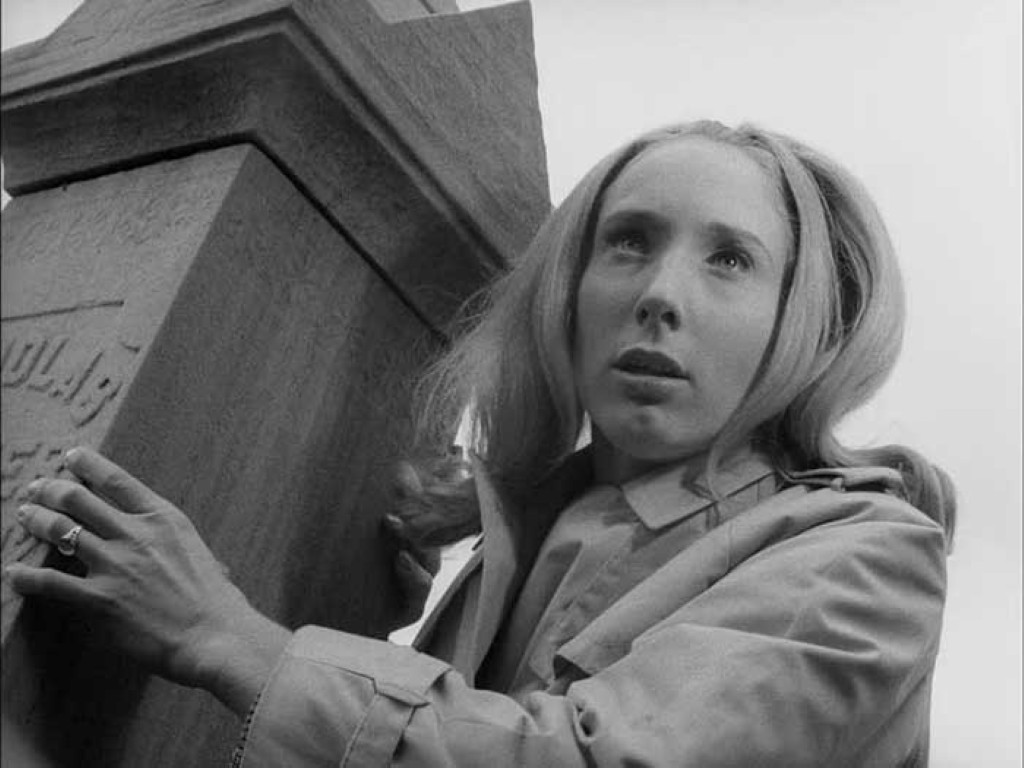
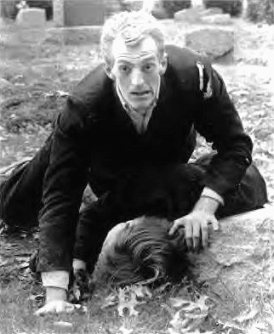
Plot: The plot is incredibly simple. Barbara and her brother Johnny are making a bit of a road trip to put flowers on the grave of their father. Without warning, they are attacked by a man in the graveyard. Johnny is knocked down, and Barbara runs, frantically fleeing to a seemingly abandoned house. She is in shock and alone. But very quickly, Ben arrives, also being chased. Very soon, other refugees appear, only to find that the house is surrounded. They learn from TV and Radio that their assailants are reanimated corpses who consume the flesh of the living. The group must work together and make tough choices if they are to survive the undead onslaught.
That is the overall plot. Fairly simple. But, behind that simple premise lies a complex story that is not only about horror, but also about race, gender, and class in a time where everything is being upended. So while the story is straightforward, it has many layers.
From this point on, there will be SPOILERS, just so you know...
American History:
Yes, if you know your history it will help you really "get" the film. The late 1960s was a chaotic time in America. The conformity of the 1950s had given way to the changes and even chaos of the 1960s. The nation was in the midst of an unpopular war (Vietnam). A charismatic President was assassinated. The government was appearing to be more corrupt. The Civil Rights movement was starting to wind down, but racial unrest continued to rock US cities (such as the Watts riots). Women were starting to challenge traditional gender roles. The economy was starting to show signs of slowdown. Divorce rates were rising. Homosexuals were also seen as threatening America's moral fabric. Finally, students everywhere were ignoring authority- they were the counterculture, denying the values of the old generation and embracing a new "holy trinity"- Sex, Drugs, and Rock 'n Roll. They dressed differently. Many lived almost communally. And they challenged the very core of American values and beliefs. America was a nearly broken society by 1968.
The zombies in NotLD can only be understood in this context. Forget the flesh eating for a second. And don't think they are the "Vietnamese" or "Hippies" or something specific. Rather, they are a primordial force of change. The zombies are so different that they don't qualify as "human" in our eyes. They represent the negative of all of our values- they don't care about family, love, country, money, honor, freedom, etc. Their only goal seems to be to kill and consume. They are not stand ins, with a particular symbolism. Instead, they reflect the fears of all the fundamental challenges that our nation was facing. The zombies are a broad mirror, reflecting the tumult of America as so many things, once so certain, seemed to be eroding so quickly. The American way of life- indeed, the very concept of "life" as we understand it, is under existential threat.
But, even worse though, is that the zombies don't just kill you. They eat your very essence. And then--- you become one of them. You are transformed into the very thing you were resisting, and all concept of self is gone. That may be the scariest thing- you become a part of this force, this tidal wave of change that no one can fully understand. Again, this reflects the fear that America was about to be forever altered- and not for the better. All that was good in us is subsumed and destroyed, both as individuals and as a nation.
Like all good horror and sci-fi films, NotLD can be interpreted in many ways. However, it is clear that the zombies are a reflection of our national (and personal) fears in 1960s America. Just as Star Trek (also a product of the 1960s) represents our Kennedy-esque optimism that the early 1960s started with, NotLD represents the chaos and fears of the late 1960s. Forget optimism. This is pure nihilism, and it reflects so well the events of that era.
Characters:
If you thought that NotLD was just a neat slice of history, it's about to get more complex. The characters in NotLD are also reflections of various issues in American society. The characters may be broad archetypes, but the acting and the situations they face elevate the characterization to a much higher level.
Let's start with Barbara and Johnny. They are the characters at the start of the film (though they are not the main characters). Barbara and Johnny represent the average American family BEFORE the storm, as it were. They seem upstanding, though Johnny doesn't like church too much. Barbara is a typical young woman- fairly conservative in her dress and demeanor. Johnny is a bit more of a jester, but harmless. A regular Joe.
When the zombie first attacks them, they (and we) have no idea what's going on. They represent their "traditional" gender roles well in the attack- Johnny fights back (and dies for his effort) while Barbara panics and runs away. By the time she makes it to the house, she is utterly hysterical, at first half-crazed, but then descending into a blankness- a numbness, as she cannot deal with the reality of her situation. Indeed, for most of the film, she is is completely passive, subordinate to the other characters. She is the stereotypical woman in a horror film- just a victim, who only stands up for herself at the bitter end, when the game is already absolutely lost.
The main character though is Ben, who arrives at the house shortly after Barbara. Ben is an African-American male. His race clearly matters, both in the film's plot (unspoken but there) and in terms of how the audience is looking at the movie. Ben is physically strong, assertive, and determined. He is a strong black man. However, he too is conservative- his dress, his manner- he is no "radical", as it were (again, 1960s here).
And yet- his color sets him apart, and sets him at odds with the other characters. Ben is tenacious, inventive, and stubborn. But above all, Ben is compassionate. He wants to survive, but he also wants to save the others too- how many ideas does he hatch to protect the group? How much thought does he put into plans for getting everyone to escape? He is very protective of Barbara after her initial hysteria passes. He even volunteers to carry a sick child as they make their run- surely the child will slow him down, and yet he offers- and it is sincere. Ben is the hero, though by 1960s standards an unorthodox one, due to his race. Indeed, some of his actions must have been shocking to 1960s audiences. For instance, when Barbara panics, Ben hits her, throwing her down on the couch. Now, slapping a hysterical female is standard horror movie fare- but for a black man to do it- wow. That must have been jarring to whites in the late 1960s, who were just coming out of Jim Crow, fearing "miscegenation".
There are several other survivors who hole up in the house, but the most significant is Harry Cooper. Cooper is a middle aged, middle class white man with a wife and ill daughter. He is desperate to survive (as Ben is). However, Harry is much more self-centered than Ben, and he is just as stubborn. But, for our purposes, Harry represents the average white American- a 1960s white-collar man seeing his way of life disintegrating before his eyes. If indeed the zombies are a stand-in for this upheaval, Harry is the middle class American man who has the most to lose.
But, as scary as the zombie/upheaval is, Harry is more threatened by Ben. Although he never utters a racial slur, you can just see it in the actor's looks- it is unspoken, and yet it is yelled in volumes. Harry resents that a black man is trying to give him orders. The undead may be stalking outside, but Harry will be damned if he's going to let this black man take over. The two men bicker and fight throughout the film. Indeed, most of the dramatic tension comes from these two- they argue, engage in fisticuffs, and- in the major twist, Ben shoots Harry. Again, think of the unspoken racial statement here.
In the end, Harry wanted to save his family (and way of life) but was just too damn pig-headed to do it. The sad part is Ben's heart has been in the right place the whole film, but it is Harry that has the correct solution. But as they can't agree- they can't get anything done to save everyone. You can sympathize with both, even if you can't believe they can't work together.
And it is the Harry/Ben dynamic that is the core theme of the film. There are forces all around us that want to destroy us utterly, and yet we cannot set aside our minor differences to confront them. The characters fail to work together- as a result, they all die. The message couldn't be any plainer. With America facing untold problems, we need to work together. Our failure to do so will doom us, one way or the other.
News in a Changing Society:
One of the most interesting and innovative features of NotLD is Romero's use of newscasts. The refugees (like the audience) don't know what the heck is going on. Is it just happening to them? What exactly is going on? Is help coming? Does the government have a plan?
News in America was changing as well in the 1960s. This major shift was happening for several reasons. First, the proliferation of TVs, which started in the 50s, exploded in the 60s. TVs were now everywhere, an accepted part of society. People crowded around to watch JFK's funeral, for example. People wanted to know what was happening, and they took comfort in the reassuring glow of television. Second, the technology was getting better. In decades past, news traveled at a slower pace. You might read about them in the paper, but that was usually it. You might read about an event that happened days ago. But, as TV improved, the ability to transmit news faster increased. Further, the power of television was such that newscasts gave you the "you are there" feeling- a sense of immediacy and connection with the news that had never been felt before. Martin Luther King understood this power very well, and used it to awaken the nation to the Civil Rights movement.
However, though news traveled faster and people became more connected to it, as American society grew more discordant, so did the news. People could see the Vietnam War in their living rooms each day (Vietnam is often called the first "Television War"). The race riots and student protests also played out on TV for all to see. And there were no answers forthcoming- only more dire news. Americans became disgruntled, but still they tuned in. It was a ritual. It was a "small comfort".
Romero's film plays this brilliantly. When Ben first finds the radio, he is desperate to hook it up- indeed, the radio is what bring Harry and the others out of hiding. But very quickly, the radio is not enough for the survivors- they need more news. They ultimately find the TV, and they gather around it in eager anticipation. Even if the news is horrifying.
The movie is absolutely relentless in its ratcheting up of the fear and tension- once the first zombie appears in the graveyard the movie just keeps bringing in more threats and dangers. However, when the TV is on, there is a sense of calm. Then, the fear fades into the background as we watch the news along with the survivors. The movie slows down the frantic pace. We learn more of what is happening- at least we know. And then, the TV anchor tells them that they CAN make it if they can get to a "rescue station", thus causing Ben to take the risk in trying to escape with everyone.
Then, at the climax, they are watching the TV. The escape attempt has failed, but the news might still help/comfort them. Just as they (and we) are settling into the newscast- the power goes out. The TV is gone, and the house is plunged into darkness. Then, the zombies begin their final assault- breaking through the barricades. The news is gone, and there is no more hope.
The use of the newscasts do indeed add to the realism- they do feel like newscasts of the era- the black and white, the shaky cameras, even a crawl on the bottom (detailing the location of the "rescue stations"). The newscasts, combined with Romero's independent film style, create a sense that this is actually happening. It makes the crazy notion of "flesh-eating ghouls" seem like a real possibility. That adds to the accomplishment of NotLD.
So does the content of a particular newscast. They show a "search and destroy" mission- cops and armed civilians going out there to kill the zombies. They are led by Chief McClellan, a tough, grizzled chief who has an air of authority and confidence- he seems optimistic about ending this in 24 hours (the reporter's words), but also says he doesn't "really know"; there is some doubt in our tough lawman. However, there is another historical image at work here. The Chief, with his all white militia and barking attack dogs- he is reminiscent of "Bull" Connor, a southern law official who used attack dogs on African American protesters- the actor even gives him a bit of a southern twang. There is more- but I want to save it for...
The Ending:
The ending to NotLD is as bitter, bleak, and hopeless, as any ending ever put on film. It is completely nihlistic.
Just as the dwindling survivors are watching the news, the power goes and the zombies attack the house. It is at this point that Ben and Harry have their last fight- ending in Harry being shot. Harry descends into the basement (which he has been calling "the safest place" since he first appeared)- he reaches for his ill daughter- knowing that the zombies are in and he failed- does he blame Ben or himself in that final moment? We will never know. He dies, pathetically and powerlessly.
Meanwhile, upstairs, Ben, Mrs. Cooper, and Barbara are fighting to keep them out. Then, knowing it's all over, Mrs. Cooper abandons the fight to go down to her daughter- for a last goodbye? To protect her? Well, it doesn't matter. She goes down just in time to see her daughter eating her freshly dead husband. The child died of her wounds, and was now a zombie. She then kills her mother, stabbing her over and over and over with a gardening tool that was in the basement.
Upstairs, it is just Ben and Barbara. She has regained her senses just in time for the end. As she fights to hold the undead out, one breaks through- her own brother Johnny. He was now one of them. She is utterly broken now- she cries as her undead brother pulls her out so that he and the other zombies could feast upon her.
Only Ben remains, and he has no choice but to flee to the basement (which he considered a "deathtrap" that had no way out). Down there in the dark, he barricades himself in, and then dispenses with the undead Coopers. When he shoots Harry (again), there is a grim determination in his eyes. If he hates or blames Harry, we will never know. With the gruesome deed done, Ben throws the gun down in despair. And then- he collects himself. He is determined to live. He grabs the gun again, looking at the small staircase, ready to shoot any zombie that gets in.
But they never do. There is no leverage on the basement stair, and the boards prevent them from getting through. Ironically, Harry was right about the basement, and Ben was wrong. Yet Ben is alive. The scene of zombies trying to break in at 3AM gives way to a quiet early morning. The camera shows the house and countryside, with birds chirping and the sun coming up. Nary a zombie is seen. We then cut to McClellan and his men, shooting a few scattered zombies as they make their way to the house. The Chief is feeling ever more confident, they are killing these things off. Order can be restored, it seems.
Ben hears the approaching lawmen and the barking attack dogs, and in a daze, leaves the basement to go to look out the window. As he does so, the Chief orders his men to shoot Ben, believing he's a zombie. Ben is shot through the head by this "Southern" lawman. The Chief announces triumphantly "He's dead! That's another one for the fire!".
The audience is then shown still shots now, looking like fuzzy newsprint. The lawmen use meat hooks to drag Ben out of the house (and presumably the Coopers, though we don't see them being dragged out we can assume they were) . We see still frames of a pile of bodies, with Ben prominent among them. We then see switch to see movie footage again- the pile of bodies is burned. The zombies. Ben. All burned together. Flames and smoke rising to the sky. The End.
The movie ends on such a tragic, even ironic note. It is a pitch black ending. It is absolutely stunning in its brutality. The heroes don't win. The people we were rooting for are all dead. Even Ben- our moral compass- killed by his very would-be rescuers. It surely doesn't get any worse. The entire film is an exercise in fear and even futility, and the ending just adds to that so perfectly.
My Conclusion: NotLD endures as a film, despite it's flaws. The film became a cult classic upon release, it's violence (and I believe, its reflection of American turmoil) keeping older Americans away, while young ones went in droves. The film would go on to inspire not just a Romero zombie franchise, but an entire sub-genre in horror- the "zombie film". You wouldn't have any Walking Dead, Shaun of the Dead, 28 Days Later, or any of those without this film. This is the one that started it all.
However, while it works as a zombie film, the social concerns on display in the film are what make it truly a remarkable achievement. It captures a moment in American time so well, so completely- again, I could talk about Star Trek and NotLD in the same breath, as they are the two sides of the 1960s coin. Every time I watch it I am awed by the movie's raw power and bleakness. It doesn't scare me, but I am unsettled- every time I see it. Not just because of the thought of the dead attacking the living, but also for what it says about us, as human beings, and as Americans.
Until Next Time...
At any rate, I want to break from the world of Warhammer and take a plunge into the world of cinematic horror. As it is approaching Halloween, I thought I'd do something to keep in the scary spirit of the season as it were. So in this post I'd like to take a bit of a look at a seminal horror classic, Romero's Night of the Living Dead. So, with that...
This was one of those movies that my parents forbade me from watching as a kid (The Exorcist was another). Though I wasn't allowed to see it, I did know of the film. For those of you in my age group (or old enough to remember) there were clips of NotLD in the VCR game "Doorways to Horror", but I didn't know anything about the movie itself. My mother in particular was adamant about me not watching the movie (and remember, this was the same mother that had no problems letting me watch violence in things like Alien or The Godfather). NotLD was verboten in my household.
Now, fast forward to my early college days. There was a lot of buzz about Resident Evil 2 for PSOne. I loved the first RE (I was a senior in high school when that one dropped), and was truly excited for RE2. But the game mags were talking about the role of Romero's films influencing the RE series (plus, he directed the Japanese commercial for the game too!). Well, after reading about all that, I decided to watch the movie. I was an adult now- I'll do what I want, damn it! So I did, and boy, did that change things for me...
A few disclaimers for those who have never seem the film before (and if you are any type of horror fan, you owe it to yourself to see it):
First, NotLD is an independent film- there isn't any Hollywood gloss on it. This has two effects- the independent, guerrilla style film-making makes the film feel raw, gritty. and realistic. However, you end up seeing some of the "seams" due to this not being a Hollywood movie (occasional wonky sound, a body whose head is virtually destroyed in one scene, but then looks whole when dragged away in a later scene)- if you know where to look you'll see errors and mistakes. You'll have to accept that if you're going to watch the movie.
Second, the film is old. Its storytelling and dialogue are from decades ago- it is a product of the late 1960s. Neither does not have the "gee whiz" special effects or action stunts that characterize zombie (and indeed, most other) Hollywood films today. The movie's pacing is deliberate, careful, taking its time to build up the characters and the frightening world they are in. It doesn't have fast cuts, CGI, huge million dollar action scenes, etc. Again, if you're going to watch the film, you have to know going in that its a different kind of movie from a different era. If you are expecting World War Z or something- this isn't it.
Last, you need to watch this movie LATE at night. In the dark. Alone or with a significant other. Not with a group of friends who may make jokes and distract from the film. No snacks either. Just a dark room with nothing else. It all adds to the atmosphere. Trust me.
So, with that out of the way, let's plunge in. I want to talk about various aspects of the movie. I think I'll do it by topic:
Plot: The plot is incredibly simple. Barbara and her brother Johnny are making a bit of a road trip to put flowers on the grave of their father. Without warning, they are attacked by a man in the graveyard. Johnny is knocked down, and Barbara runs, frantically fleeing to a seemingly abandoned house. She is in shock and alone. But very quickly, Ben arrives, also being chased. Very soon, other refugees appear, only to find that the house is surrounded. They learn from TV and Radio that their assailants are reanimated corpses who consume the flesh of the living. The group must work together and make tough choices if they are to survive the undead onslaught.
That is the overall plot. Fairly simple. But, behind that simple premise lies a complex story that is not only about horror, but also about race, gender, and class in a time where everything is being upended. So while the story is straightforward, it has many layers.
From this point on, there will be SPOILERS, just so you know...
American History:
Yes, if you know your history it will help you really "get" the film. The late 1960s was a chaotic time in America. The conformity of the 1950s had given way to the changes and even chaos of the 1960s. The nation was in the midst of an unpopular war (Vietnam). A charismatic President was assassinated. The government was appearing to be more corrupt. The Civil Rights movement was starting to wind down, but racial unrest continued to rock US cities (such as the Watts riots). Women were starting to challenge traditional gender roles. The economy was starting to show signs of slowdown. Divorce rates were rising. Homosexuals were also seen as threatening America's moral fabric. Finally, students everywhere were ignoring authority- they were the counterculture, denying the values of the old generation and embracing a new "holy trinity"- Sex, Drugs, and Rock 'n Roll. They dressed differently. Many lived almost communally. And they challenged the very core of American values and beliefs. America was a nearly broken society by 1968.
The zombies in NotLD can only be understood in this context. Forget the flesh eating for a second. And don't think they are the "Vietnamese" or "Hippies" or something specific. Rather, they are a primordial force of change. The zombies are so different that they don't qualify as "human" in our eyes. They represent the negative of all of our values- they don't care about family, love, country, money, honor, freedom, etc. Their only goal seems to be to kill and consume. They are not stand ins, with a particular symbolism. Instead, they reflect the fears of all the fundamental challenges that our nation was facing. The zombies are a broad mirror, reflecting the tumult of America as so many things, once so certain, seemed to be eroding so quickly. The American way of life- indeed, the very concept of "life" as we understand it, is under existential threat.
But, even worse though, is that the zombies don't just kill you. They eat your very essence. And then--- you become one of them. You are transformed into the very thing you were resisting, and all concept of self is gone. That may be the scariest thing- you become a part of this force, this tidal wave of change that no one can fully understand. Again, this reflects the fear that America was about to be forever altered- and not for the better. All that was good in us is subsumed and destroyed, both as individuals and as a nation.
Like all good horror and sci-fi films, NotLD can be interpreted in many ways. However, it is clear that the zombies are a reflection of our national (and personal) fears in 1960s America. Just as Star Trek (also a product of the 1960s) represents our Kennedy-esque optimism that the early 1960s started with, NotLD represents the chaos and fears of the late 1960s. Forget optimism. This is pure nihilism, and it reflects so well the events of that era.
Characters:
If you thought that NotLD was just a neat slice of history, it's about to get more complex. The characters in NotLD are also reflections of various issues in American society. The characters may be broad archetypes, but the acting and the situations they face elevate the characterization to a much higher level.
Let's start with Barbara and Johnny. They are the characters at the start of the film (though they are not the main characters). Barbara and Johnny represent the average American family BEFORE the storm, as it were. They seem upstanding, though Johnny doesn't like church too much. Barbara is a typical young woman- fairly conservative in her dress and demeanor. Johnny is a bit more of a jester, but harmless. A regular Joe.
When the zombie first attacks them, they (and we) have no idea what's going on. They represent their "traditional" gender roles well in the attack- Johnny fights back (and dies for his effort) while Barbara panics and runs away. By the time she makes it to the house, she is utterly hysterical, at first half-crazed, but then descending into a blankness- a numbness, as she cannot deal with the reality of her situation. Indeed, for most of the film, she is is completely passive, subordinate to the other characters. She is the stereotypical woman in a horror film- just a victim, who only stands up for herself at the bitter end, when the game is already absolutely lost.
The main character though is Ben, who arrives at the house shortly after Barbara. Ben is an African-American male. His race clearly matters, both in the film's plot (unspoken but there) and in terms of how the audience is looking at the movie. Ben is physically strong, assertive, and determined. He is a strong black man. However, he too is conservative- his dress, his manner- he is no "radical", as it were (again, 1960s here).
And yet- his color sets him apart, and sets him at odds with the other characters. Ben is tenacious, inventive, and stubborn. But above all, Ben is compassionate. He wants to survive, but he also wants to save the others too- how many ideas does he hatch to protect the group? How much thought does he put into plans for getting everyone to escape? He is very protective of Barbara after her initial hysteria passes. He even volunteers to carry a sick child as they make their run- surely the child will slow him down, and yet he offers- and it is sincere. Ben is the hero, though by 1960s standards an unorthodox one, due to his race. Indeed, some of his actions must have been shocking to 1960s audiences. For instance, when Barbara panics, Ben hits her, throwing her down on the couch. Now, slapping a hysterical female is standard horror movie fare- but for a black man to do it- wow. That must have been jarring to whites in the late 1960s, who were just coming out of Jim Crow, fearing "miscegenation".
There are several other survivors who hole up in the house, but the most significant is Harry Cooper. Cooper is a middle aged, middle class white man with a wife and ill daughter. He is desperate to survive (as Ben is). However, Harry is much more self-centered than Ben, and he is just as stubborn. But, for our purposes, Harry represents the average white American- a 1960s white-collar man seeing his way of life disintegrating before his eyes. If indeed the zombies are a stand-in for this upheaval, Harry is the middle class American man who has the most to lose.
But, as scary as the zombie/upheaval is, Harry is more threatened by Ben. Although he never utters a racial slur, you can just see it in the actor's looks- it is unspoken, and yet it is yelled in volumes. Harry resents that a black man is trying to give him orders. The undead may be stalking outside, but Harry will be damned if he's going to let this black man take over. The two men bicker and fight throughout the film. Indeed, most of the dramatic tension comes from these two- they argue, engage in fisticuffs, and- in the major twist, Ben shoots Harry. Again, think of the unspoken racial statement here.
In the end, Harry wanted to save his family (and way of life) but was just too damn pig-headed to do it. The sad part is Ben's heart has been in the right place the whole film, but it is Harry that has the correct solution. But as they can't agree- they can't get anything done to save everyone. You can sympathize with both, even if you can't believe they can't work together.
And it is the Harry/Ben dynamic that is the core theme of the film. There are forces all around us that want to destroy us utterly, and yet we cannot set aside our minor differences to confront them. The characters fail to work together- as a result, they all die. The message couldn't be any plainer. With America facing untold problems, we need to work together. Our failure to do so will doom us, one way or the other.
News in a Changing Society:
One of the most interesting and innovative features of NotLD is Romero's use of newscasts. The refugees (like the audience) don't know what the heck is going on. Is it just happening to them? What exactly is going on? Is help coming? Does the government have a plan?
News in America was changing as well in the 1960s. This major shift was happening for several reasons. First, the proliferation of TVs, which started in the 50s, exploded in the 60s. TVs were now everywhere, an accepted part of society. People crowded around to watch JFK's funeral, for example. People wanted to know what was happening, and they took comfort in the reassuring glow of television. Second, the technology was getting better. In decades past, news traveled at a slower pace. You might read about them in the paper, but that was usually it. You might read about an event that happened days ago. But, as TV improved, the ability to transmit news faster increased. Further, the power of television was such that newscasts gave you the "you are there" feeling- a sense of immediacy and connection with the news that had never been felt before. Martin Luther King understood this power very well, and used it to awaken the nation to the Civil Rights movement.
However, though news traveled faster and people became more connected to it, as American society grew more discordant, so did the news. People could see the Vietnam War in their living rooms each day (Vietnam is often called the first "Television War"). The race riots and student protests also played out on TV for all to see. And there were no answers forthcoming- only more dire news. Americans became disgruntled, but still they tuned in. It was a ritual. It was a "small comfort".
Romero's film plays this brilliantly. When Ben first finds the radio, he is desperate to hook it up- indeed, the radio is what bring Harry and the others out of hiding. But very quickly, the radio is not enough for the survivors- they need more news. They ultimately find the TV, and they gather around it in eager anticipation. Even if the news is horrifying.
The movie is absolutely relentless in its ratcheting up of the fear and tension- once the first zombie appears in the graveyard the movie just keeps bringing in more threats and dangers. However, when the TV is on, there is a sense of calm. Then, the fear fades into the background as we watch the news along with the survivors. The movie slows down the frantic pace. We learn more of what is happening- at least we know. And then, the TV anchor tells them that they CAN make it if they can get to a "rescue station", thus causing Ben to take the risk in trying to escape with everyone.
Then, at the climax, they are watching the TV. The escape attempt has failed, but the news might still help/comfort them. Just as they (and we) are settling into the newscast- the power goes out. The TV is gone, and the house is plunged into darkness. Then, the zombies begin their final assault- breaking through the barricades. The news is gone, and there is no more hope.
The use of the newscasts do indeed add to the realism- they do feel like newscasts of the era- the black and white, the shaky cameras, even a crawl on the bottom (detailing the location of the "rescue stations"). The newscasts, combined with Romero's independent film style, create a sense that this is actually happening. It makes the crazy notion of "flesh-eating ghouls" seem like a real possibility. That adds to the accomplishment of NotLD.
So does the content of a particular newscast. They show a "search and destroy" mission- cops and armed civilians going out there to kill the zombies. They are led by Chief McClellan, a tough, grizzled chief who has an air of authority and confidence- he seems optimistic about ending this in 24 hours (the reporter's words), but also says he doesn't "really know"; there is some doubt in our tough lawman. However, there is another historical image at work here. The Chief, with his all white militia and barking attack dogs- he is reminiscent of "Bull" Connor, a southern law official who used attack dogs on African American protesters- the actor even gives him a bit of a southern twang. There is more- but I want to save it for...
The Ending:
The ending to NotLD is as bitter, bleak, and hopeless, as any ending ever put on film. It is completely nihlistic.
Just as the dwindling survivors are watching the news, the power goes and the zombies attack the house. It is at this point that Ben and Harry have their last fight- ending in Harry being shot. Harry descends into the basement (which he has been calling "the safest place" since he first appeared)- he reaches for his ill daughter- knowing that the zombies are in and he failed- does he blame Ben or himself in that final moment? We will never know. He dies, pathetically and powerlessly.
Meanwhile, upstairs, Ben, Mrs. Cooper, and Barbara are fighting to keep them out. Then, knowing it's all over, Mrs. Cooper abandons the fight to go down to her daughter- for a last goodbye? To protect her? Well, it doesn't matter. She goes down just in time to see her daughter eating her freshly dead husband. The child died of her wounds, and was now a zombie. She then kills her mother, stabbing her over and over and over with a gardening tool that was in the basement.
Upstairs, it is just Ben and Barbara. She has regained her senses just in time for the end. As she fights to hold the undead out, one breaks through- her own brother Johnny. He was now one of them. She is utterly broken now- she cries as her undead brother pulls her out so that he and the other zombies could feast upon her.
Only Ben remains, and he has no choice but to flee to the basement (which he considered a "deathtrap" that had no way out). Down there in the dark, he barricades himself in, and then dispenses with the undead Coopers. When he shoots Harry (again), there is a grim determination in his eyes. If he hates or blames Harry, we will never know. With the gruesome deed done, Ben throws the gun down in despair. And then- he collects himself. He is determined to live. He grabs the gun again, looking at the small staircase, ready to shoot any zombie that gets in.
But they never do. There is no leverage on the basement stair, and the boards prevent them from getting through. Ironically, Harry was right about the basement, and Ben was wrong. Yet Ben is alive. The scene of zombies trying to break in at 3AM gives way to a quiet early morning. The camera shows the house and countryside, with birds chirping and the sun coming up. Nary a zombie is seen. We then cut to McClellan and his men, shooting a few scattered zombies as they make their way to the house. The Chief is feeling ever more confident, they are killing these things off. Order can be restored, it seems.
Ben hears the approaching lawmen and the barking attack dogs, and in a daze, leaves the basement to go to look out the window. As he does so, the Chief orders his men to shoot Ben, believing he's a zombie. Ben is shot through the head by this "Southern" lawman. The Chief announces triumphantly "He's dead! That's another one for the fire!".
The audience is then shown still shots now, looking like fuzzy newsprint. The lawmen use meat hooks to drag Ben out of the house (and presumably the Coopers, though we don't see them being dragged out we can assume they were) . We see still frames of a pile of bodies, with Ben prominent among them. We then see switch to see movie footage again- the pile of bodies is burned. The zombies. Ben. All burned together. Flames and smoke rising to the sky. The End.
The movie ends on such a tragic, even ironic note. It is a pitch black ending. It is absolutely stunning in its brutality. The heroes don't win. The people we were rooting for are all dead. Even Ben- our moral compass- killed by his very would-be rescuers. It surely doesn't get any worse. The entire film is an exercise in fear and even futility, and the ending just adds to that so perfectly.
My Conclusion: NotLD endures as a film, despite it's flaws. The film became a cult classic upon release, it's violence (and I believe, its reflection of American turmoil) keeping older Americans away, while young ones went in droves. The film would go on to inspire not just a Romero zombie franchise, but an entire sub-genre in horror- the "zombie film". You wouldn't have any Walking Dead, Shaun of the Dead, 28 Days Later, or any of those without this film. This is the one that started it all.
However, while it works as a zombie film, the social concerns on display in the film are what make it truly a remarkable achievement. It captures a moment in American time so well, so completely- again, I could talk about Star Trek and NotLD in the same breath, as they are the two sides of the 1960s coin. Every time I watch it I am awed by the movie's raw power and bleakness. It doesn't scare me, but I am unsettled- every time I see it. Not just because of the thought of the dead attacking the living, but also for what it says about us, as human beings, and as Americans.
Until Next Time...
Subscribe to:
Posts (Atom)