Showing posts with label Movie Reviews. Show all posts

Friday, October 16, 2015

Examining a Movie: Night of the Living Dead

Hey there, my denizens of the "Eye of Terror" (known in these parts colloquially as "The Internet" or "The Information Superhighway"). How go your wars against the false emperor and his lapdogs?

At any rate, I want to break from the world of Warhammer and take a plunge into the world of cinematic horror. As it is approaching Halloween, I thought I'd do something to keep in the scary spirit of the season as it were. So in this post I'd like to take a bit of a look at a seminal horror classic, Romero's Night of the Living Dead. So, with that...


This was one of those movies that my parents forbade me from watching as a kid (The Exorcist was another). Though I wasn't allowed to see it, I did know of the film. For those of you in my age group (or old enough to remember) there were clips of NotLD in the VCR game "Doorways to Horror", but I didn't know anything about the movie itself. My mother in particular was adamant about me not watching the movie (and remember, this was the same mother that had no problems letting me watch violence in things like Alien or The  Godfather). NotLD was verboten in my household.


Now, fast forward to my early college days. There was a lot of buzz about Resident Evil 2 for PSOne. I loved the first RE (I was a senior in high school when that one dropped), and was truly excited for RE2. But the game mags were talking about the role of Romero's films influencing the RE series (plus, he directed the Japanese commercial for the game too!). Well, after reading about all that, I decided to watch the movie. I was an adult now- I'll do what I want, damn it! So I did, and boy, did that change things for me...

A few disclaimers for those who have never seem the film before (and if you are any type of horror fan, you owe it to yourself to see it):

First, NotLD is an independent film- there isn't any Hollywood gloss on it. This has two effects- the independent, guerrilla style film-making makes the film feel raw, gritty. and realistic. However, you end up seeing some of the "seams" due to this not being a Hollywood movie (occasional wonky sound, a body whose head is virtually destroyed in one scene, but then looks whole when dragged away in a later scene)- if you know where to look you'll see errors and mistakes. You'll have to accept that if you're going to watch the movie.


Second, the film is old. Its storytelling and dialogue are from decades ago- it is a product of the late 1960s. Neither does not have the "gee whiz" special effects or action stunts that characterize zombie (and indeed, most other) Hollywood films today. The movie's pacing is deliberate, careful, taking its time to build up the characters and the frightening world they are in. It doesn't have fast cuts, CGI, huge million dollar action scenes, etc. Again, if you're going to watch the film, you have to know going in that its a different kind of movie from a different era. If you are expecting World War Z or something- this isn't it.

Last, you need to watch this movie LATE at night. In the dark. Alone or with a significant other. Not with a group of friends who may make jokes and distract from the film. No snacks either. Just a dark room with nothing else. It all adds to the atmosphere. Trust me.

So, with that out of the way, let's plunge in. I want to talk about various aspects of the movie. I think I'll do it by topic:

Plot: The plot is incredibly simple. Barbara and her brother Johnny are making a bit of a road trip to put flowers on the grave of their father. Without warning, they are attacked by a man in the graveyard. Johnny is knocked down, and Barbara runs, frantically fleeing to a seemingly abandoned house. She is in shock and alone. But very quickly, Ben arrives, also being chased. Very soon, other refugees appear, only to find that the house is surrounded. They learn from TV and Radio that their assailants are reanimated corpses who consume the flesh of the living.  The group must work together and make tough choices if they are to survive the undead onslaught.


That is the overall plot. Fairly simple. But, behind that simple premise lies a complex story that is not only about horror, but also about race, gender, and class in a time where everything is being upended.  So while the story is straightforward, it has many layers.

From this point on, there will be SPOILERS, just so you know...

American History:

Yes, if you know your history it will help you really "get" the film. The late 1960s was a chaotic time in America. The conformity of the 1950s had given way to the changes and even chaos of the 1960s. The nation was in the midst of an unpopular war (Vietnam). A charismatic President was assassinated. The government was appearing to be more corrupt. The Civil Rights movement was starting to wind down, but racial unrest continued to rock US cities (such as the Watts riots). Women were starting to challenge traditional gender roles. The economy was starting to show signs of slowdown. Divorce rates were rising. Homosexuals were also seen as threatening America's moral fabric. Finally, students everywhere were ignoring authority- they were the counterculture, denying the values of the old generation and embracing a new "holy trinity"- Sex, Drugs, and Rock 'n Roll. They dressed differently. Many lived almost communally. And they challenged the very core of American values and beliefs. America was a nearly broken society by 1968.


The zombies in NotLD can only be understood in this context. Forget the flesh eating for a second. And don't think they are the "Vietnamese" or  "Hippies" or something specific. Rather, they are a primordial force of change. The zombies are so different that they don't qualify as "human" in our eyes. They represent the negative of all of our values- they don't care about family, love, country, money, honor, freedom, etc. Their only goal seems to be to kill and consume. They are not stand ins, with a particular symbolism. Instead, they reflect the fears of all the fundamental challenges that our nation was facing. The zombies are a broad mirror, reflecting the tumult of America as so many things, once so certain, seemed to be eroding so quickly. The American way of life- indeed, the very concept of "life" as we understand it, is under existential threat.

But, even worse though, is that the zombies don't just kill you. They eat your very essence. And then--- you become one of them. You are transformed into the very thing you were resisting, and all concept of self is gone. That may be the scariest thing- you become a part of this force, this tidal wave of change that no one can fully understand. Again, this reflects the fear that America was about to be forever altered- and not for the better. All that was good in us is subsumed and destroyed, both as individuals and as a nation.

Like all good horror and sci-fi films, NotLD can be interpreted in many ways. However, it is clear that the zombies are a reflection of our national (and personal) fears in 1960s America. Just as Star Trek (also a product of the 1960s) represents our Kennedy-esque optimism that the early 1960s started with, NotLD represents the chaos and fears of the late 1960s. Forget optimism. This is pure nihilism, and it reflects so well the events of that era.

Characters:
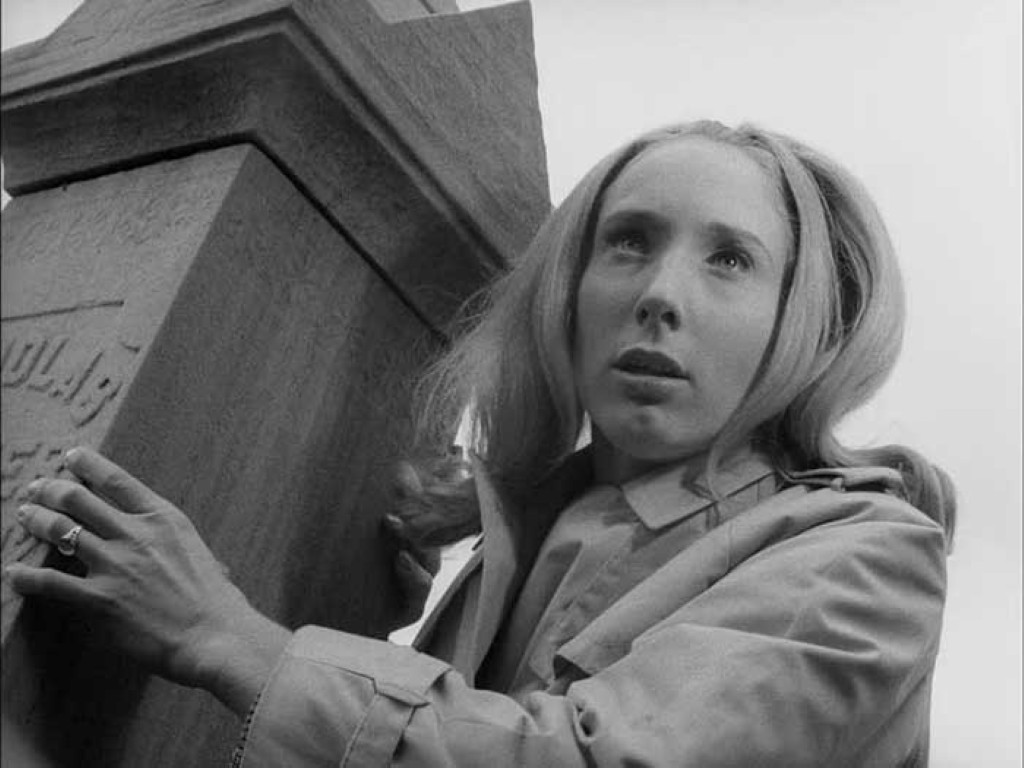

If you thought that NotLD was just a neat slice of history, it's about to get more complex. The characters in NotLD are also reflections of various issues in American society. The characters may be broad archetypes, but the acting and the situations they face elevate the characterization to a much higher level.


Let's start with Barbara and Johnny. They are the characters at the start of the film (though they are not the main characters). Barbara and Johnny represent the average American family BEFORE the storm, as it were. They seem upstanding, though Johnny doesn't like church too much. Barbara is a typical young woman- fairly conservative in her dress and demeanor. Johnny is a bit more of a jester, but harmless. A regular Joe.
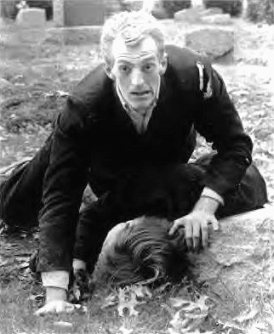

When the zombie first attacks them, they (and we) have no idea what's going on. They represent their "traditional" gender roles well in the attack- Johnny fights back (and dies for his effort) while Barbara panics and runs away. By the time she makes it to the house, she is utterly hysterical, at first half-crazed, but then descending into a blankness- a numbness, as she cannot deal with the reality of her situation. Indeed, for most of the film, she is is completely passive, subordinate to the other characters. She is the stereotypical woman in a horror film- just a victim, who only stands up for herself at the bitter end, when the game is already absolutely lost.


The main character though is Ben, who arrives at the house shortly after Barbara. Ben is an African-American male. His race clearly matters, both in the film's plot (unspoken but there) and in terms of how the audience is looking at the movie. Ben is physically strong, assertive, and determined. He is a strong black man. However, he too is conservative- his dress, his manner- he is no "radical", as it were (again, 1960s here).


 And yet- his color sets him apart, and sets him at odds with the other characters. Ben is tenacious, inventive, and stubborn. But above all, Ben is compassionate. He wants to survive, but he also wants to save the others too- how many ideas does he hatch to protect the group? How much thought does he put into plans for getting everyone to escape? He is very protective of Barbara after her initial hysteria passes. He even volunteers to carry a sick child as they make their run- surely the child will slow him down, and yet he offers- and it is sincere. Ben is the hero, though by 1960s standards an unorthodox one, due to his race. Indeed, some of his actions must have been shocking to 1960s audiences. For instance, when Barbara panics, Ben hits her, throwing her down on the couch. Now, slapping a hysterical female is standard horror movie fare- but for a black man to do it- wow. That must have been jarring to whites in the late 1960s, who were just coming out of Jim Crow, fearing "miscegenation".


There are several other survivors who hole up in the house, but the most significant is Harry Cooper. Cooper is a middle aged, middle class white man with a wife and ill daughter. He is desperate to survive (as Ben is). However, Harry is much more self-centered than Ben, and he is just as stubborn. But, for our purposes, Harry represents the average white American- a 1960s white-collar man seeing his way of life disintegrating before his eyes. If indeed the zombies are a stand-in for this upheaval, Harry is the middle class American man who has the most to lose.


But, as scary as the zombie/upheaval is, Harry is more threatened by Ben. Although he never utters a racial slur, you can just see it in the actor's looks- it is unspoken, and yet it is yelled in volumes. Harry resents that a black man is trying to give him orders. The undead may be stalking outside, but Harry will be damned if he's going to let this black man take over. The two men bicker and fight throughout the film. Indeed, most of the dramatic tension comes from these two- they argue, engage in fisticuffs, and- in the major twist, Ben shoots Harry. Again, think of the unspoken racial statement here.


In the end, Harry wanted to save his family (and way of life) but was just too damn pig-headed to do it. The sad part is Ben's heart has been in the right place the whole film, but it is Harry that has the correct solution. But as they can't agree- they can't get anything done to save everyone. You can sympathize with both, even if you can't believe they can't work together.

And it is the Harry/Ben dynamic that is the core theme of the film. There are forces all around us that want to destroy us utterly, and yet we cannot set aside our minor differences to confront them. The characters fail to work together- as a result, they all die. The message couldn't be any plainer. With America facing untold problems, we need to work together. Our failure to do so will doom us, one way or the other.


News in a Changing Society:

One of the most interesting and innovative features of NotLD is Romero's use of newscasts. The refugees (like the audience) don't know what the heck is going on. Is it just happening to them? What exactly is going on? Is help coming? Does the government have a plan?


News in America was changing as well in the 1960s. This major shift was happening for several reasons. First, the proliferation of TVs, which started in the 50s, exploded in the 60s. TVs were now everywhere, an accepted part of society. People crowded around to watch JFK's funeral, for example. People wanted to know what was happening, and they took comfort in the reassuring glow of television. Second, the technology was getting better. In decades past, news traveled at a slower pace. You might read about them in the paper, but that was usually it. You might read about an event that happened days ago. But, as TV improved, the ability to transmit news faster increased. Further, the power of television was such that newscasts gave you the "you are there" feeling- a sense of immediacy and connection with the news that had never been felt before. Martin Luther King understood this power very well, and used it to awaken the nation to the Civil Rights movement.

However, though news traveled faster and people became more connected to it, as American society grew more discordant, so did the news. People could see the Vietnam War in their living rooms each day (Vietnam is often called the first "Television War"). The race riots and student protests also played out on TV for all to see. And there were no answers forthcoming- only more dire news. Americans became disgruntled, but still they tuned in. It was a ritual. It was a "small comfort".


Romero's film plays this brilliantly. When Ben first finds the radio, he is desperate to hook it up- indeed, the radio is what bring Harry and the others out of hiding. But very quickly, the radio is not enough for the survivors- they need more news. They ultimately find the TV, and they gather around it in eager anticipation. Even if the news is horrifying.


The movie is absolutely relentless in its ratcheting up of the fear and tension- once the first zombie appears in the graveyard the movie just keeps bringing in more threats and dangers. However, when the TV is on, there is a sense of calm. Then, the fear fades into the background as we watch the news along with the survivors. The movie slows down the frantic pace. We learn more of what is happening- at least we know. And then, the TV anchor  tells them that they CAN make it if they can get to a "rescue station", thus causing Ben to take the risk in trying to escape with everyone.

Then, at the climax, they are watching the TV. The escape attempt has failed, but the news might still help/comfort them. Just as they (and we) are settling into the newscast- the power goes out. The TV is gone, and the house is plunged into darkness. Then, the zombies begin their final assault- breaking through the barricades. The news is gone, and there is no more hope.

The use of the newscasts do indeed add to the realism- they do feel like newscasts of the era- the black and white, the shaky cameras, even a crawl on the bottom (detailing the location of the "rescue stations").  The newscasts, combined with Romero's independent film style, create a sense that this is actually happening. It makes the crazy notion of "flesh-eating ghouls" seem like a real possibility. That adds to the accomplishment of NotLD.


So does the content of a particular newscast. They show a "search and destroy" mission- cops and armed civilians going out there to kill the zombies. They are led by Chief McClellan, a tough, grizzled chief who has an air of authority and confidence- he seems optimistic about ending this in 24 hours (the reporter's words), but also says he doesn't "really know"; there is some doubt in our tough lawman. However, there is another historical image at work here. The Chief, with his all white militia and barking attack dogs- he is reminiscent of "Bull" Connor, a southern law official who used attack dogs on African American protesters- the actor even gives him a bit of a southern twang. There is more- but I want to save it for...


The Ending:

The ending to NotLD is as bitter, bleak, and hopeless, as any ending ever put on film. It is completely nihlistic.

Just as the dwindling survivors are watching the news, the power goes and the zombies attack the house. It is at this point that Ben and Harry have their last fight- ending in Harry being shot. Harry descends into the basement (which he has been calling "the safest place" since he first appeared)- he reaches for his ill daughter- knowing that the zombies are in and he failed- does he blame Ben or himself in that final moment? We will never know. He dies, pathetically and powerlessly.


Meanwhile, upstairs, Ben, Mrs. Cooper, and Barbara are fighting to keep them out. Then, knowing it's all over, Mrs. Cooper abandons the fight to go down to her daughter- for a last goodbye? To protect her? Well, it doesn't matter. She goes down just in time to see her daughter eating her freshly dead husband. The child died of her wounds, and was now a zombie. She then kills her mother, stabbing her over and over and over with a gardening tool that was in the basement.


Upstairs, it is just Ben and Barbara. She has regained her senses just in time for the end. As she fights to hold the undead out, one breaks through- her own brother Johnny. He was now one of them. She is utterly broken now- she cries as her undead brother pulls her out so that he and the other zombies could feast upon her.


Only Ben remains, and he has no choice but to flee to the basement (which he considered a "deathtrap" that had no way out). Down there in the dark, he barricades himself in, and then dispenses with the undead Coopers. When he shoots Harry (again), there is a grim determination in his eyes. If he hates or blames Harry, we will never know. With the gruesome deed done, Ben throws the gun down in despair. And then- he collects himself. He is determined to live. He grabs the gun again, looking at the small staircase, ready to shoot any zombie that gets in.


But they never do. There is no leverage on the basement stair, and the boards prevent them from getting through. Ironically, Harry was right about the basement, and Ben was wrong. Yet Ben is alive. The scene of zombies trying to break in at 3AM gives way to a quiet early morning. The camera shows the house and countryside, with birds chirping and the sun coming up. Nary a zombie is seen. We then cut to McClellan and his men, shooting a few scattered zombies as they make their way to the house. The Chief is feeling ever more confident, they are killing these things off. Order can be restored, it seems.


Ben hears the approaching lawmen and the barking attack dogs, and in a daze, leaves the basement to go to look out the window. As he does so, the Chief orders his men to shoot Ben, believing he's a zombie. Ben is shot through the head by this "Southern" lawman. The Chief announces triumphantly "He's dead! That's another one for the fire!".


The audience is then shown still shots now, looking like fuzzy newsprint. The lawmen use meat hooks to drag Ben out of the house (and presumably the Coopers, though we don't see them being dragged out we can assume they were) . We see still frames of a pile of bodies, with Ben prominent among them. We then see switch to see movie footage again- the pile of bodies is burned. The zombies. Ben. All burned together. Flames and smoke rising to the sky. The End.


The movie ends on such a tragic, even ironic note. It is a pitch black ending. It is absolutely stunning in its brutality. The heroes don't win. The people we were rooting for are all dead. Even Ben- our moral compass- killed by his very would-be rescuers. It surely doesn't get any worse. The entire film is an exercise in fear and even futility, and the ending just adds to that so perfectly.


My Conclusion: NotLD endures as a film, despite it's flaws. The film became a cult classic upon release, it's violence (and I believe, its reflection of American turmoil) keeping older Americans away, while young ones went in droves. The film would go on to inspire not just a Romero zombie franchise, but an entire sub-genre in horror- the "zombie film". You wouldn't have any Walking Dead, Shaun of the Dead, 28 Days Later, or any of those without this film. This is the one that started it all.

However, while it works as a zombie film, the social concerns on display in the film are what make it truly a remarkable achievement. It captures a moment in American time so well, so completely- again, I could talk about Star Trek and NotLD in the same breath, as they are the two sides of the 1960s coin. Every time I watch it I am awed by the movie's raw power and bleakness. It doesn't scare me, but I am unsettled- every time I see it. Not just because of the thought of the dead attacking the living, but also for what it says about us, as human beings, and as Americans.

Until Next Time...


Monday, April 20, 2015

Examining A Movie: The War of the Worlds (1953)

Hey there Chaos followers and assorted mutants. Old Man Chaos has been working on lots of Warhammer stuff- I'm trying to finish up my Harlequin vehicles while also working on some new stuff for my Khorne Daemonkin force (loving that book at the moment). However, I'm not done with anything to show yet, and as you know I don't want this blog to just be about 40K... So, I've decided to do a little movie review. With that, let us now turn to...


First, a little personal background: I loved this movie as a child. My parents were both into Sci-fi to one extent or another, and between the two of them I was introduced to tons of Sci-fi stuff, including Star Trek, The Black Hole, Star Wars, Alien, and a whole lot more. So, of course my parents ended up watching this, and I was just sucked in. Since they owned it on the old Videodisc format, I know I saw it many times as a young kid. It would also be a movie I would revisit quite often; I watched it over the weekend on Netflix, as a matter of fact!


The movie is very, very loosely based on the famous book of the same name by H.G. Wells. I have read it twice- the book is about a British man trying to survive a Martian invasion of England. The character (who is the narrator and hence never gives his name) tries to find his wife, while seeing the horrors of an alien invasion. The Martians, in their tripod walkers, lay waste to the British army with both "heat rays" and poison gas ("black smoke"). The book is written in older English, and it really helps if you know the geography around London. The book was quite revolutionary for its time, and also serves as a critique of British Imperialism. The Martians, so technologically and mentally advanced are able to sweep the British away so easily (just as the British seemed to do to other Asian/African peoples). Allegory? Perhaps, though the book has more than just that going on. The book has become a classic, inspiring Sci-fi creators for over a century.


The 1953 film is, as I said, a rather loose interpretation of the book, though they are accurate when it comes to the broadest strokes (and gist). This time, the story takes place in America, where Dr. Clayton Forester takes the lead in examining a crashed meteor in California. Of course, its not a meteor, but a cylinder that contains three Martian war machines. The American military goes against these Martians, and they are totally destroyed. Now, Forester and Sylvia must try to survive while also, hopefully, finding a way to defeat the alien invaders, who are seemingly unstoppable.


First and foremost, the special effects make the movie so memorable and striking. Now, I admit they are dated, but actually hold up better than you might actually think. The Martian war machines hover and tick menacingly, gently gliding along, incinerating anything in their path. The heat ray is quite simple in look, but effective due to the sound effect that goes with it. The martians themselves, which you never get a close look at, or appropriately weird. Their eyes are obviously a poor effect, but their flesh moves and pulses, which actually looks creepy and real. You also get to see all kinds of US military hardware on display, including a flying wing and an atomic bomb.


The big battle scene, which takes place in the middle of the movie, is still rather exciting, even now. Tanks, planes, and all kinds of ordinance are fired at the Martians, blowing up spectacularly, but also without result. Martian shields prevent any damage, while their death rays just vaporize the army. It is thrilling to watch, even now. We throw everything at them, and they just move forward at an even rate, not stopped by our "powerful" weapons. Later in the film, even nukes cannot harm them.


The other big scene of destruction comes at the end of the movie, with the war machines descending upon Los Angeles. There is no army. No resistance. The Martians are just destroying everything in their path without mercy. It is not as thrilling as the earlier battle, but you get the feeling of hopelessness. It seems no power on earth con stop them.


The movie, surprisingly for 1953, isn't afraid to get its hands dirty. As the people flee LA, there is chaos and anarchy. Mobs of wild people (some criminals, others just left behind) attack any trucks or cars. One of the trucks has important scientific equipment on board; Forester begs the mob to stop, but they won't listen. From that point on, Forester is a desperate, slightly crazed man, without any hope. Not bad for 1953.


The movie is not an allegory, though the Cold War comes up obliquely here. The Martians are cold and unsympathetic, their home world a frozen wasteland. They are advanced in technology, but not in morality. Americans viewed the Soviets in such terms (even before Sputnik was launched). Their "godlessness" is also emphasized. One of the first people the martians kill is a minister; later, references are made to God, creation, etc. Finally, as the Martians burn LA, the only place of safety is the church- take that you godless commies, er, Martians.


What this movie really is, though, is a kind of prototype of future Hollywood sci-fi / destruction films. Whether its Independence Day (which is, in many ways, a direct rip off) or any other large scale disaster film, it is War of the Worlds that sets the tone. The film's main character is a famous scientist advising the military. The smaller characters are either killed or forgotten with total abandon. The scenes of destruction are top notch. The film also has a montage, showing other nations fighting (and losing to) the Martians. This film set the tone and troupes that many movies would use. Frankly, it does it better than half of them do today, that's for sure.


The acting is good enough, as it is the action and effects that will make the movie, not the actors. That said, Gene Barry does a good job of making a "thinking man's hero" out of Dr. Forester. He is a genius, but he realizes early on that even his gifted intellect is of no match for the Martians. As his hope evaporates, he breaks down, becoming near hysterical at the end. His "girlfriend" (they aren't dating but they fall for each other during the Martian assault) Sylvia, played by Ann Robinson, has little to do but scream and run, though she suffers the personal loss of her minister uncle. Finally, Les Tremayne plays General Mann, an Eisenhower-esque soldier who relies on Forester's knowledge and America's brute strength, and he too does a good job of showing frustration and defeat, though he never "loses" it as Forester does. Tremayne has a the air of command, making Mann a tough, but reliable soldier.


The film starts slow, but once it gets going it simply doesn't stop. The action, special effects, music, and solid lead acting make War of the Worlds a first rate classic. It may not be as thought provoking as say Day the Earth Stood Still or Invasion of the Body Snatchers, it is still a great movie, and it set up incredible precedents, which are still with Hollywood today. If you are a Sci-fi fan, check this film out. I know you won't regret it.


** For the record, Steven Spielberg made a version of War of the Worlds in 2005. That movie is also very good (for different reasons). It is a "bit" more faithful to the book, and the alien war machines are very cool looking. The film is also a strong Allegory to the War on Terror- is that blood or oil? However, I prefer the 1953 version (I can only take so much Tom Cruise running and little girl screaming, which the movie does in spades). Perhaps I should review this one in the future...

Until next time...


Monday, March 2, 2015

Examining a Movie: The Black Hole

Hey there, foul inhabitants of the warp! Old Man Chaos here, very excited by the new Bloodthirster coming out this week- can't wait to get my mitts on him! But first I have to finish the 8 Billion projects I already have going... I have been going through a case of painters OCD, but I should be able to finish a few models fairly soon... At any rate, I said a few weeks ago that I wanted to write posts about things other than my main hobby, so here it is...


Examining a Movie: The Black Hole

The film The Black Hole was released by Disney in 1979. It was Disney's answer to Star Wars' big success (and Trek was having a big screen come back as well that year). However, when the film opened it bombed badly, and was an embarrassment to Disney. It fell into a strange obscurity thereafter- known by die-hard sci-fi fans, but ignored and unknown by everyone else. Even many of those sci-fi fans dislike the movie.

However, I feel this film needs to be re-evaluated on a number of levels. I think its bad reputation is not only NOT deserved, but unfair. This is not just nostalgia, though I did see the movie as a kid. I watched the movie recently with my wife, who had never seen it before. At the end, she said she liked it a great deal. She admitted it had flaws, but was an interesting movie. Now, my wife will tell me if she thinks a movie I get her to watch blows (she has reminded me about how much she hated Watchmen oh so often). She liked this movie, with no rose colored lenses of nostalgia.

I would like to discuss the movie in some categories. Forgive me if I jump around a bit...


Plot: I don't want to give spoliers at this point, so here is the set-up: The movie is set in the future- when is somewhat unclear. We have space travel, though it is risky, dangerous, and, frankly, arduous. We also have robots- they have "personality", but are they "living things" (one of the film's many ambiguities). The crew of the Palomino, led by Captain Dan Holland. Their mission is to explore and find "intelligent life". Without the crew saying so, it seems the universe is pretty empty indeed, and their mission has not been much of a success. At any rate, the Palomino encounters a Black Hole, more powerful than any recorded. They are nearly pulled in, but they escape due to the "aid" of another, almost ghostly ship. Upon scanning, the crew finds it is the USS Cygnus- a huge, behemoth, yet graceful and elegant, ship; one presumed lost in space. Holland and the crew decide to investigate.


On the Cygnus, they find only one man alive, Dr. Hans Reinhardt, commander of the vessel. Reinhardt explains that his ship had been damaged by meteors years ago, and that he had the crew abandon ship (he didn't leave the ship though; Captain is the last man on board deal, going down with the ship), and he didn't know what happened to them. He repaired the ship with the help of his robots. But rather than return home, he stayed in space, exploring the galaxy's mysteries. The one "challenge" that has eluded him is the Black Hole, and he is in the process of unravelling that one too. He is planning to go into the Black Hole, proving science (and his ego) can overcome anything, even the power of a Black Hole.


As the crew deal with Reinhardt, they notice three things. One, he is definitely on the "eccentric" side- is he crazy, or is just that he has been alone for so long that it has made him a bit weird? Two, the Palomino crew realize Reinhardt's story just isn't adding up, for reasons they can't explain. Third, they find that Reinhardt's robots are, well, threatening, to say the least, particularly Maximilian, Reinhardt's own special design. Holland and company have more questions than answers. Then, as the film goes on, Reinhardt begins to reveal his true motives and intentions, which have Holland's crew running for their lives, trying to escape the Cygnus, and the Black Hole. Can they escape? Will Reinhardt accomplish his plans? And just what is the true nature of these robots?


From here, I'm going to get into different aspects of the film. There will be spoilers, so if you don't want spoilage stop here and see the movie... If you haven't seen it, you really should...

 What Went "Wrong" in 1979 (and after): The movie was a box office disaster for Disney, and at first glance, you can see why. This is NOT Star Wars (or Trek). The Black Hole is a complicated movie, part Sci-fi actioner, part mystery, and a whole heaping dose of questioning morality. The film is slow at the beginning, with a hefty amount of exposition. Once the threat is revealed, the movie then kicks into gear, progressing quickly. However, the nature of the threat is rather "dark" and frankly, a little scary- kids certainly would be scared. It is a "dark" film- somber, with some disturbing questions about life in the universe. It does attempt some humor with VINCENT, the robot member of the Palomino, but it is minor at most. So, when sci-fi people went expecting a Disney Star Wars type of film, they got a bleak movie. So, it failed. Further, the film does break some of the basic rules of physics (even my wife snickered at some of the rather implausible space physics). That turned off serious sci-fans too.


But "Wrong" is actually (mostly) "Right": Disney should be respected for taking a risk. They could have made a simple Star Wars clone, but instead they opted for something very different. This wasn't a space epic, it was a morality play. Disney didn't take the easy way out, and it hurt them, though it didn't deserve it. The pacing isn't fully action packed, but it isn't really that type of movie. One needs to "get" that in order to appreciate the film. This movie is examining big ideas, and even uncomfortable ones. Further, though the science/physics are wonky, one must accept it as the price of admission. It might be a bit of a leap of faith, but if you can really suspend your disbelief, you might be able to ignore the "bad" science. If you can, it won't actually matter to the plot of the film.


Special Effects/Music: If there is one area that people can agree on this movie, even the haters, it is that the Special Effects are top notch. The two ships are very well detailed miniatures. The Palomino is a small, but trusty vessel, while the Cygnus is just sweeping and ornate, with a hint of both grandeur and menace. The various robots are mostly cool (some hate VINCENT and BOB, but I get what they were doing here- they are "friendly" robots, so they look "cute", unlike Reinhardt's creations). In particular, the robot Maximilian is just the stuff of absurd nightmare- he is painted devil-red, hulking, fast, but with an odd assortment of weapons.


The interior of the Cygnus is cavernous, but again brilliant and just larger than life- Gothic is a good word for it. Finally, there's the Black Hole itself- omnipresent, in space, always swirling, moving, destroying. The effect will stick with you, as does the entire production design. Plot aside, the LOOK is unique, and no sci-fi film has this look and feel. The score, by John Barry, is equally good- ominous, brooding, and on occasion rousing. The score adds to the feel of the film.


The Plot Thickens: Now, here I want to get into the "twists", turns, and themes. The film is about the human mind- Reinhardt's in particular, but in general as well. Reinhardt is mankind- looking to the stars, blessed by God with intellect. Humanity wants to solve the mysteries of the universe. The NEED to know is great. It may be arrogance that man THINKS he can control science and conquer all, and what happens to man if he does accomplish this?


This is where we find Reinhardt. A brilliant man who believes that "the ends justify the means". He will achieve what none have been able to. He will solve this last great mystery- what lies on the other side of the Black Hole. His genius will make it happen. Unfortunately, he will do ANYTHING to achieve his (noble?) goal. Morality, humanity, God... all irrelevant to Reinhardt's quest. Reinhardt believes that the other side of the Black Hole is a place why the concepts of right and wrong are gone, fundamental laws of nature do not apply, they vanish. And one could live forever there.


As it turns out, the Cygnus' original mission was to find new life- the government spent a fortune building the Cygnus, based on Reinhardt's own singular vision. After a good amount of time exploring space, Earth contacted the Cygnus and ordered Reinhardt to come back, his mission deemed a failure. That was something he could not tolerate, and he refused to obey. His crew mutinied, but he managed to put down the revolt using his "Sentry Robots". However, he was faced with a dilemma- the ship was too large to be run by one man with the rest of the crew locked in the brig. So, bending his intellect to the problem, Reinhardt came to a horrifying conclusion. He decided to lobotomize his crew- basically he destroyed their free will and "programmed" them to continue working on the ship as they had before. Now, they are mute, wraithlike. He dressed them in robes and masks so he wouldn't have to look at their faces- he thought of them as robots, without troubling his mind too much over what he had done. He then turned to his obsession- the Black Hole, without worrying about any one else's needs. He is Niche's "Superman"- nothing can stand in his way of achieving great feats.


Interestingly enough, NONE of his robots speak, not even his greatest creation, Maximilian. Free will troubles Reinhardt. This is why humanity cannot accomplish anything- free will is too troublesome. You need a singular vision- an iron will and steely determination. Get rid of free will, and the "great man" can do anything. Or so it seems to Reinhardt.


However, the film has more to say on that. Religion (or, perhaps, a spirituality) is a major theme in the film. BOB says that intelligent life is the MOST important thing in the universe, and Reinhardt disregards that basic, important rule. Reinhardt himself quotes the Bible at one point. One Palomino crew member, Dr. McCray, has minor ESP abilities (more a psychic spirituality and empathy than anything else, though she can mentally communicate with VINCENT. Is that a huh? Yes, it is odd, yet the theme of Spirituality covers this- VINCENT has free will and is therefore alive). One character calls what lies on the other side of the Black Hole the "mind of God". There is a religious quality at work here that many Space Sci-fi movies lack.


And just to be clear, the theme of religion dominates the film. Reinhardt expresses SOME slight guilt over his deeds, and he IMPLIES that Maximilian is responsible, as if the creation is in control of the creator. Could it be? Or is Reinhardt simply projecting his evil onto his robot? Is Maximilian the DEVIL (as he appears)? Or is he just a physical representation of Reinhardt's Id? The movie gives no answers here. Is there a devil, or are we evil all by ourselves?


The end of the movie just adds to the Spiritualism. The Cygnus is struck by meteors (irony or karma?), and drifts into the Black Hole, breaking apart. Reinhardt has a smaller probe ship, and he intends to fly it into the Black Hole. However, his command center collapses, and he is stuck in the wreckage, surrounded by his lobotomized crew who, thanks to his evil handiwork, can only focus on their tasks running the ship, and thus pay no heed to his cries of pain. Maximilian ignores Reinhardt as well, following his last order to prepare the probe ship. Is Maximilian the devil leaving his pawn Reinhardt behind and discarded, or is the robot simply following its master's last order?


In the end, the surviving Palomino crew members destroy Maximilian and board the probe ship, with no choice but to fly into the Black Hole. Time, space, and matter begin to distort, as the ship plummets faster and faster down the Black Hole. In McCray's (psychic) mind's eye, we then see something bizarre, yet fitting. We see Reinhardt spinning in infinity- alive? How can this be? What the...? His hair has grown long, his beard immense. How long has he been there? Then, when it looks like he will be there forever alone- he sees Maximilian. He grabs hold of his wicked robot. Then, with a quick camera pan, Reinhardt's eyes are WITHIN Maximilian's red visor. Reinhardt is INSIDE his creation, his eyes frantically looking about in abject horror. The robot is then stuck on a rock, immobile, looking down on a field of fire, with the lobotomized crew standing by. It is a rather creepy image, and it just begs the question- is this hell? Is this Reinhardt's punishment for his disregard for morality? And the crew? Did he not only strip away their free will, but also their very souls? Are they damned as well? Intriguing, and uncomfortable.


But then, the hellish scene gives way to a bright corridor, through which a robed figure glides through- Jesus? God? The Human Spirit? With a flash, and without word, the probe ship comes out of the other side of the Black Hole. Ahead of the ship is a planet, bathed in white light. Heaven? Sanctuary? Just an alien world? The film ends here, leaving you to ponder their fate.


Whoa, That Is Weird: Yes, the film is certainly an oddity. And I love it for that. It has big ideas, and isn't afraid to make you think about the darker side of human nature and the technology we have created. The film is anchored by Maximilian Schell and Robert Forster. Schell gives a great performance as Reinhardt. His German accent adds to the character (and the Niche threads). But, he is larger than life, full of grand thoughts and gestures. But he is also warped beyond all repair- knowing the evil he has done, but believing the evil was for a greater goal. The actor evokes awe, sympathy, and disgust in equal measures- which is no small feat.


 Robert Forster, on the other hand, is in many ways the opposite of Reinhardt. He is neither brilliant nor grand. He is, in some respects, an everyman. He is captain, and his responsibility to to protect the lives of his crew. He does have an innate, quiet decency, even when it comes to the robots VINCENT and old BOB, which Reinhardt lacks entirely. It is certainly the less flashy role, but works as a good contrast to the antagonist.  The other cast members are good as well, particularly Anthony Perkins, whose Dr. Durrant admires Reinhardt's brilliance and finds it hard to believe that genius has led to insanity.


This may be the strangest movie review I have written, but it is also a strange movie, so I guess it is fitting. I think any sci-fi fan owes it to themselves to check this film out (Disney, you need to make a special edition on Blu-ray, immediately). You need to put it into the context of the time in which it was made, as well as being able to have a stronger suspension of disbelief than you are used to. If you can do those things, you should watch this film. It is visually interesting, has a good cast, and does make you think.    interestingly, Interstellar recently had somewhat similar questions about Black Holes and human nature, though that film is FAR more upbeat, optimistic, and positive than this older movie.


I give this film 3 out of 4 Marks of Chaos. If you're a space / sci-fi fan, you may want to check this out. 


Until next time!!